Badge
May 9, 2026
Accelerating Innovation Low-Code Platforms Redefine App Development
Discover how low-code platforms are revolutionizing software creation in 2026. With AI integration and visual development, they offer unprecedented speed and accessibility for building powerful app...
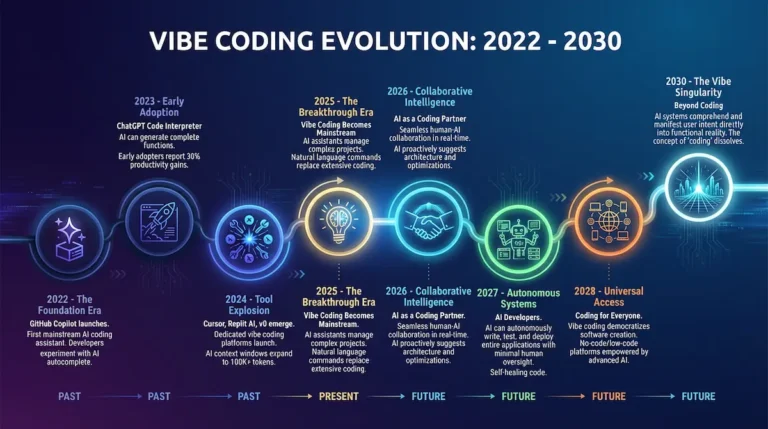
In the rapidly evolving landscape of digital transformation, low-code platforms have emerged as a pivotal force, democratizing application development and dramatically accelerating innovation. As we navigate 2026, these tools are no longer niche solutions but integral components of modern development strategies, offering a powerful synergy between speed, accessibility, and cutting-edge technology like AI.
The core promise of low-code lies in its ability to abstract away much of the complexity inherent in traditional software engineering. By leveraging visual interfaces, pre-built components, and drag-and-drop functionalities, developers and even citizen developers can construct sophisticated applications with significantly less manual coding. This paradigm shift not only hastens development cycles but also frees up valuable engineering resources to focus on more complex challenges.
The AI Integration Revolution
What truly distinguishes the leading low-code platforms in 2026 is their profound integration with artificial intelligence. AI is no longer an afterthought; it's woven into the fabric of these development environments. This manifests in AI-assisted design, intelligent workflow automation, and even AI-driven app generation, enabling teams to prototype, build, and deploy applications at an unprecedented pace. Businesses are harnessing these capabilities to reduce costs, enhance agility, and scale their digital products far more effectively than traditional coding methods would allow.
Leading the Charge: Top Platforms for 2026
Several platforms are at the forefront of this low-code revolution, each offering distinct strengths. OutSystems stands out for its enterprise-grade scalability and robust AI-powered DevSecOps automation, designed for rapid deployment of complex, secure applications. Mendix fosters collaborative development through its agile, visual tools and AI-assisted sprint planning, making it ideal for teams managing multiple projects in dynamic environments.
Microsoft Power Apps leverages its deep integration with the Microsoft ecosystem, offering AI assistance for creating dashboards, workflows, and internal tools, making it a highly adopted choice for enterprise users. Appian excels in process automation, particularly for regulated industries, using BPM and workflow automation to enhance operational efficiency and ensure compliance. Salesforce Platform provides potent low-code tools focused on CRM extensions and business applications, enhanced by Einstein AI for predictive analytics and automation.
For those outside traditional development roles, Bubble offers a powerful visual programming environment for building full-fledged applications without prior coding knowledge, a boon for startups and entrepreneurs. Retool specifically targets the rapid development of internal business tools, providing pre-built components for efficient creation of admin panels and dashboards. Finally, Airtable blends the familiarity of spreadsheets with database capabilities, enabling straightforward app development for project management and custom workflows.
Transforming Productivity and Collaboration
The impact of low-code on productivity cannot be overstated. Compared to traditional development, where extensive coding and debugging are the norm, low-code platforms streamline the entire process. Visual builders and pre-built logic significantly reduce the need for manual coding, leading to faster iteration and easier collaboration between technical and non-technical stakeholders. This accessibility breaks down silos, enabling business users to contribute directly to application creation, fostering a more agile and responsive development culture.
Enterprise-Grade Integration and Security
As low-code platforms mature, their enterprise integration and security capabilities have become paramount. Modern platforms seamlessly integrate with major cloud providers like AWS, Azure, and Google Cloud, offering flexibility and enabling deployment across multi-cloud architectures. Security is a critical focus, with robust features for access control, data protection, and compliance baked into the development process. This ensures that even rapidly built applications meet stringent enterprise security standards, building confidence for widespread adoption.
The Future is Accessible and Intelligent
Low-code platforms are not just about speed; they represent a fundamental shift towards more accessible and intelligent software development. By empowering a broader range of users and infusing development with AI, these platforms are poised to accelerate digital innovation across all sectors, making sophisticated application creation a reality for more organizations than ever before.
Source Insight: This report was curated based on original coverage from techtimes.com.
Explore Kri-Zek
📱 Altered Brilliance App
Download on Google Play · Watch the Trailer
📖 The Power of Gaming
Watch the Video
🤝 Connect With Us
Kri-Zek on LinkedIn · Founder on LinkedIn · Happenstance
📸 Follow Us on Instagram
@krizekster · @krizek.tech · @krizekindia