Badge
May 24, 2026
Agentic Coding Revolutionizes App Development Speed and Efficiency
Discover how autonomous AI agents are reshaping the software development lifecycle.
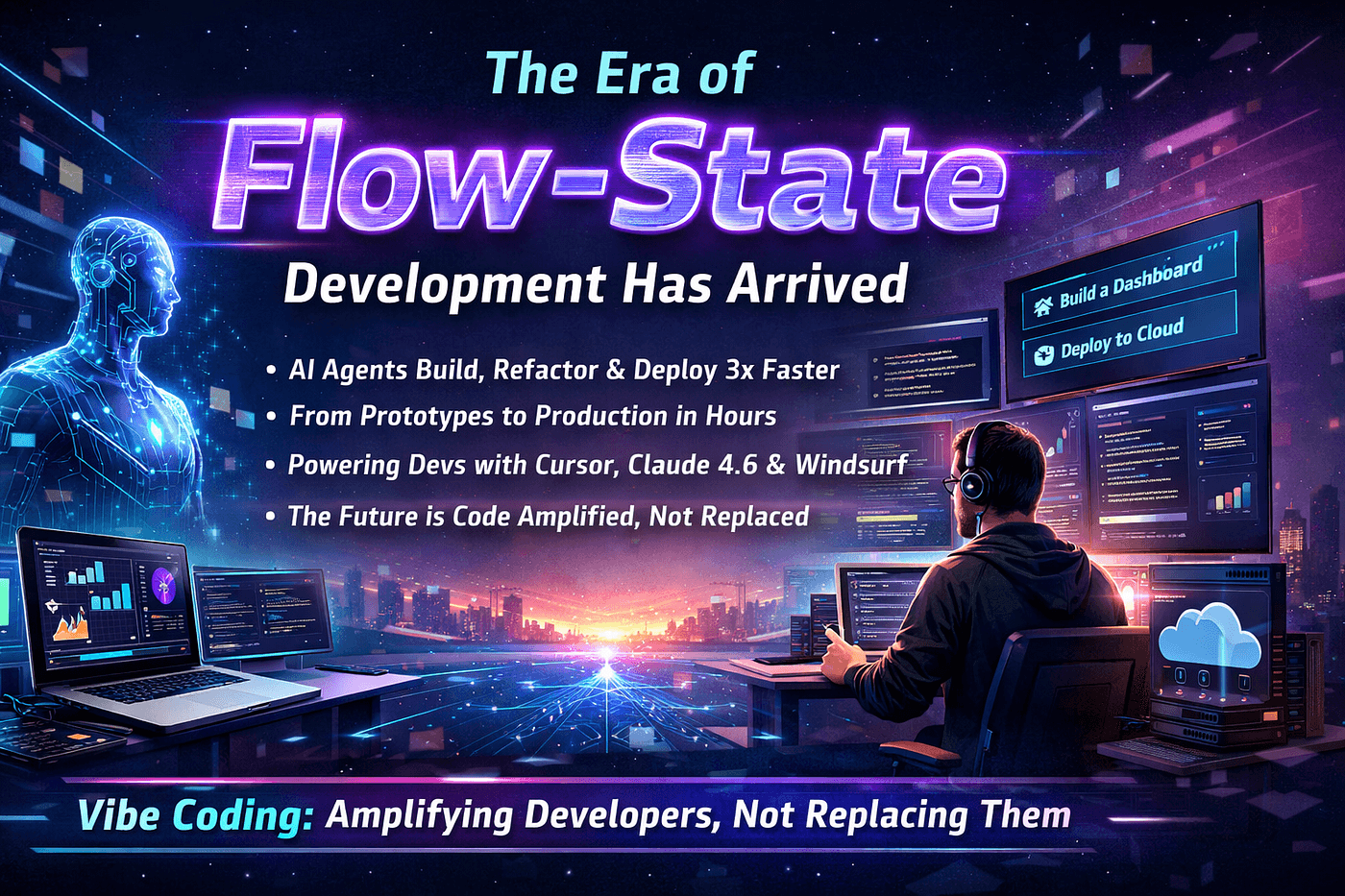
The landscape of software development has undergone a seismic shift, with agentic coding emerging as the driving force behind unprecedented speed and efficiency. This isn't merely an incremental improvement; it represents a fundamental category change in how applications are built. Projects once estimated to take many months are now being completed in a matter of weeks, thanks to AI agents that autonomously handle planning, coding, testing, and even self-correction.
At its core, agentic coding leverages multi-agent systems that operate in parallel across the entire software development lifecycle (SDLC). Unlike the AI coding assistants of the early 2020s, which acted as glorified autocomplete or reactive chat tools, today's agents are proactive. They can reason over an entire codebase, break down complex goals into smaller sub-tasks, and execute them without constant human intervention. This has led to significant time savings, with some enterprises reporting hundreds of thousands of hours saved and fintech platforms doubling their execution speeds.
The Leap from Assistance to Autonomy
The key differentiator lies in "Autonomy Time." While previous AI tools required constant human prompts and oversight, agentic systems can operate productively for extended periods. If an agent is tasked with implementing a complex feature, it doesn't just provide a code snippet. It analyzes the project's structure, writes the necessary code, runs tests, and resolves any identified issues—all independently. Advanced LLMs like Claude 4.6 Sonnet and GPT-5.2 Codex have moved from a reactive to a proactive stance, marking the transition from "assistive" to "agentic" AI.
The Rise of "Vibe Coding"
This evolution has also fueled the rise of "vibe coding," a concept that has matured from a hobbyist trend into a professional standard. Vibe coding emphasizes natural language-driven development, allowing founders to articulate their high-level intent and let the agentic engine handle the intricate technical details. This empowers non-technical founders to achieve development speeds previously exclusive to senior engineering teams, effectively bridging the gap between an initial concept and a production-ready application.
Under the Hood: The Anatomy of a Coding Agent
Agentic coding systems are not monolithic. They comprise several sophisticated components working in concert. Cognitive Engines, powered by advanced LLMs, provide the core reasoning and language understanding. Reasoning Orchestrators are deterministic layers that deconstruct broad objectives into sequential, manageable tasks. Tool Harnesses grant agents the ability to interact with the real world, enabling them to read files, execute commands, and consult documentation. Crucially, Self-correction Loops allow agents to automatically read error logs, re-evaluate their strategies, and retry tasks when tests fail, eliminating the need for immediate human intervention in routine debugging.
Redefining the Development Workflow
The implications for founders and product leaders are profound. The ability to dramatically accelerate development cycles opens up enormous competitive advantages. However, it's important to note that full delegation of tasks to AI remains limited, typically between 0% and 20%. Humans are still essential for critical areas such as high-level architecture design, rigorous security reviews, and high-stakes decision-making. The new role for developers often involves directing these powerful agents rather than writing every line of code themselves.
Future Implications and Adoption
Data from industry reports indicates widespread adoption and significant benefits. A substantial majority of teams utilizing embedded AI report dramatically faster software delivery. This trend signifies a new era where speed-to-market is no longer a bottleneck but a strategic enabler. As agentic coding matures, we can expect even more sophisticated applications and workflows to emerge, further transforming the software development landscape and empowering innovation across all sectors.
Embracing agentic coding requires a strategic understanding of its capabilities and limitations. By effectively integrating these AI agents into the development process, companies can unlock unparalleled efficiency, reduce costs, and gain a significant edge in today's fast-paced digital economy. The future of app development is here, and it's being written by intelligent agents.
Source Insight: This report was curated based on original coverage from bolderapps.com.
Explore Kri-Zek
📱 Altered Brilliance App
Download on Google Play · Watch the Trailer
📖 The Power of Gaming
Watch the Video
🤝 Connect With Us
Kri-Zek on LinkedIn · Founder on LinkedIn · Happenstance
📸 Follow Us on Instagram
@krizekster · @krizek.tech · @krizekindia