Badge
Apr 27, 2026
AI's Ascent in Game Design Powered by Unreal Engine Advancements
Explore how AI is revolutionizing game development, with Unreal Engine 5.5 at the forefront. Discover AI's impact on content creation, NPC intelligence, and the future of interactive experiences.
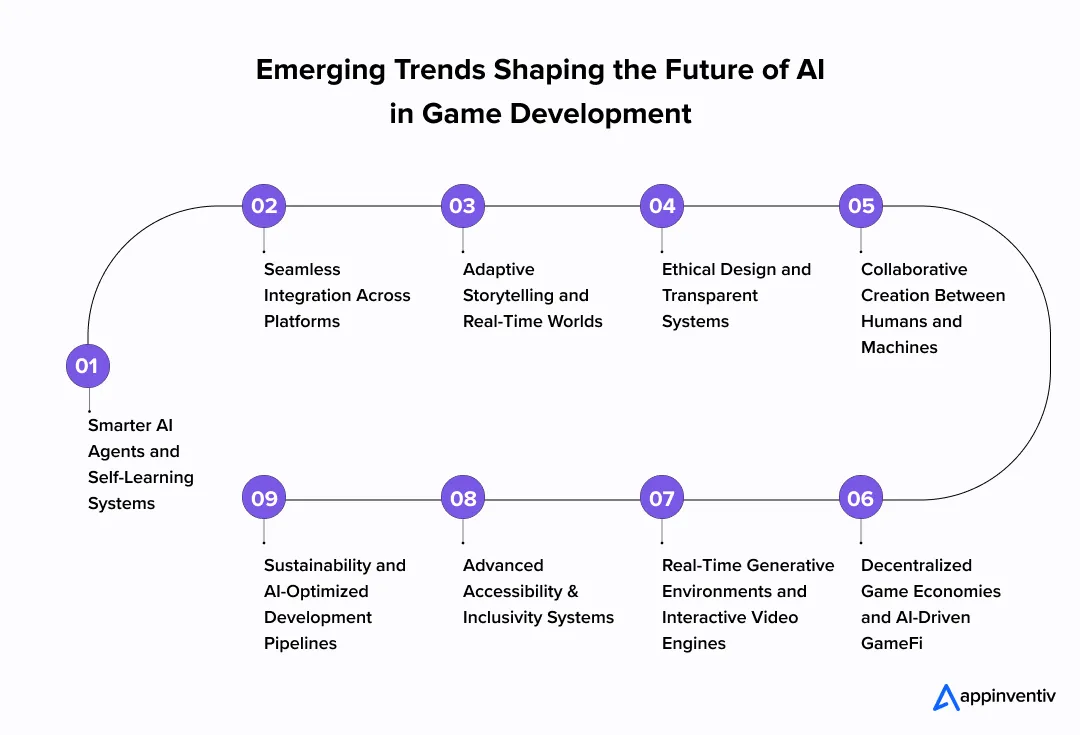
The landscape of game development is undergoing a profound metamorphosis in 2026, with artificial intelligence no longer a nascent concept but a foundational pillar across production pipelines. From the intricate generation of vast game worlds to the nuanced behavior of non-player characters (NPCs) and the automation of rigorous quality assurance processes, AI's influence is pervasive. The latest iterations of leading game engines, including Unreal Engine 5.5, Unity 2026, and the advancing Godot 4.x, now provide developers with sophisticated tools that were once the realm of science fiction.
This AI-driven revolution is fundamentally reshaping how games are conceived and realized. A recent GDC survey highlights this seismic shift, revealing that a significant 78% of AAA studios are actively integrating AI-powered tools into their development workflows, a figure that is rapidly escalating. This adoption is most pronounced in four key domains: Content Generation, where Procedural Content Generation (PCG) enables the creation of unique, dynamic environments; NPC Behavior, leveraging large language models for context-aware and truly interactive dialogues; Asset Creation, with AI tools accelerating the generation of textures, 3D models, and animations; and Testing & QA, through the implementation of intelligent AI agents for automated game testing.
Epic Games has once again pushed the boundaries with Unreal Engine 5.5, introducing native AI integration and a suite of tools designed to streamline the development process for creators at all levels. This version notably enhances the capabilities of Nanite, the engine's virtualized geometry system. Nanite 2.0 boasts significantly improved efficiency, with approximately a 20% reduction in GPU load, and crucially, adds native support for foliage and skinned meshes, features that were previously experimental or unsupported. Furthermore, Nanite 2.0 extends its reach to mobile platforms for high-end devices and offers native stereo rendering optimization for VR/AR experiences, marking a substantial leap in geometric detail and performance.
Complementing Nanite's geometric prowess, Lumen, Unreal Engine's real-time global illumination system, has also received substantial upgrades in version 5.5. The engine now employs a Hardware Ray Tracing Hybrid approach, blending software and hardware ray tracing for optimal performance. This iteration significantly reduces light leaking in interior environments, enhances the clarity of reflections on smooth surfaces, and delivers a noticeable performance boost of 30-40% on comparable hardware, leading to more visually immersive and realistic game worlds.
At the core of AI-powered game development lies Procedural Content Generation (PCG). This paradigm shift moves away from manual asset placement towards a rule-based system where designers define parameters and constraints, allowing the AI to construct complex environments autonomously. Unreal Engine 5.5's integrated PCG framework works seamlessly with both Blueprints and C++, empowering developers to define terrain generation, biome classification based on environmental factors, and the strategic placement of vegetation and settlements.
Algorithms like Wave Function Collapse (WFC) are becoming indispensable for creating cohesive and logically structured game levels. WFC is particularly adept at generating interconnected rooms for dungeons, realistic street layouts for cities, and ensuring seamless transitions between diverse terrain textures, contributing to the overall believability and organic feel of generated content.
Perhaps the most transformative AI advancement in 2026 is the development of AI-controlled NPCs powered by Large Language Models (LLMs). These intelligent agents move beyond pre-scripted dialogue trees, capable of engaging in dynamic, natural conversations. They possess the ability to remember past interactions, adapt their responses based on the game's evolving narrative and player actions, and exhibit emergent behaviors that make game worlds feel truly alive and reactive. This heralds an era where player immersion is heightened by interactions that feel genuinely intelligent and responsive.
The implications of these AI advancements extend far beyond mere efficiency. They democratize complex game creation, enabling smaller teams and individual developers to achieve results previously requiring vast resources. This fosters greater creativity and allows for more ambitious game designs, pushing the boundaries of interactive entertainment. As AI continues to integrate deeper into the development lifecycle, the future promises games that are not only more visually stunning and technically advanced but also more intelligent, responsive, and profoundly engaging.
Source Insight: This report was curated based on original coverage from mazdek.ch.
Explore Kri-Zek
📱 Altered Brilliance App
Download on Google Play · Watch the Trailer
📖 The Power of Gaming
Watch the Video
🤝 Connect With Us
Kri-Zek on LinkedIn · Founder on LinkedIn · Happenstance
📸 Follow Us on Instagram
@krizekster · @krizek.tech · @krizekindia