Badge
Apr 5, 2026
AI Transforms App Development Empowering New Creators and Accelerating Innovation
Discover how 'vibe coding' and conversational AI are democratizing software creation, empowering non-developers, and supercharging productivity for seasoned engineers.
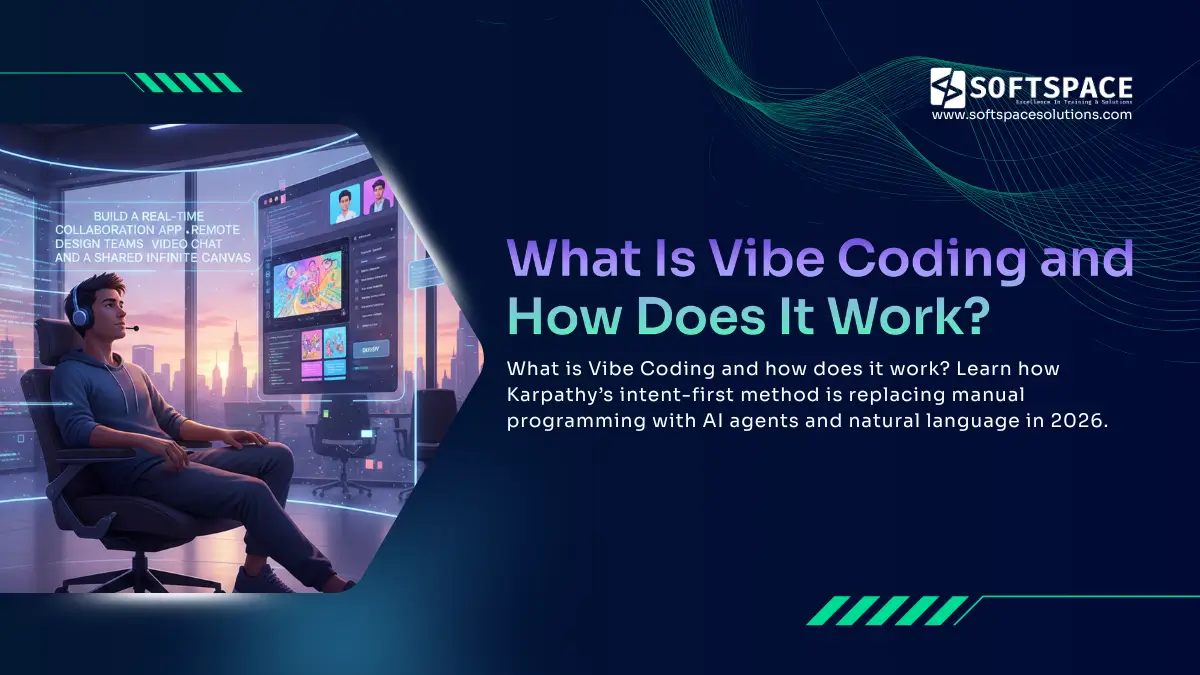
The landscape of software development is undergoing a seismic shift, propelled by artificial intelligence. A burgeoning trend, aptly termed 'vibe coding' by computer scientist Andrej Karpathy, signifies a profound change in how applications are conceived and built. This approach leverages AI to transform natural language conversations into functional code, effectively lowering the barrier to entry for aspiring creators and enabling existing developers to operate at unprecedented speeds.
For individuals like Doher Drizzle Pablo, a professional who previously found herself overwhelmed by tedious administrative tasks, AI-powered tools have become indispensable allies. Without any prior coding experience, Pablo utilized an AI feature within Microsoft Power Apps to build a custom expense management application in just two hours. This newfound capability has not only streamlined her workflow but also empowered her to tackle a wider array of operational challenges, from calendar synchronization to customer lead management, demonstrating AI's potential to democratize development beyond traditional tech roles.
Historically, the creation of software was largely confined to those with formal training in computer science. However, the proliferation of no-code, low-code, and pro-code AI tools—such as Microsoft Power Apps, Microsoft 365 Copilot's App Builder agent, GitHub Spark, VS Code, and GitHub Copilot—is fundamentally altering this paradigm. These platforms are extending the power of application development to a broader audience, including business professionals with no technical background, thereby fostering innovation and problem-solving across diverse sectors.
Experienced developers are also embracing these AI advancements, albeit with a measure of cautious optimism. Tools like GitHub Copilot are proving instrumental in accelerating the prototyping phase, helping to overcome the daunting 'blank page problem' and swiftly translating abstract concepts into tangible prototypes. Furthermore, AI assists in implementing complex modifications or experiments that would traditionally demand extensive manual coding, freeing developers from time-consuming, repetitive tasks.
Distinguished Engineer David Fowler highlights the "multiplier effect" AI tools provide for software engineers. By automating the research and preparatory stages of a project, these tools prevent developers from becoming mired in minutiae, leading to significant boosts in productivity. Fowler himself uses AI to automate mundane, repetitive tasks, thereby reclaiming valuable time and mental energy for more strategic and impactful work. He notes instances where AI has enabled colleagues to transform existing applications into robust web services without writing a single line of new code.
This collaborative dynamic shifts the developer's focus from the intricate 'how' of coding to the overarching 'what' of the project's objectives. This "outcome-driven development" allows developers to concentrate on higher-level architectural decisions and strategic goals, while AI handles the underlying code generation and implementation. This reduction in effort for foundational tasks encourages experimentation, enabling developers to explore diverse ideas and iterate on solutions more rapidly than ever before.
Despite the transformative potential, apprehension persists within the engineering community. Software development encompasses more than just code generation; it involves crucial people-centric activities such as requirement gathering, strategic planning, and anticipating future evolution. Concerns exist that the ease of AI-generated code could lead to oversight in critical areas, potentially burdening engineers with the responsibility of rectifying errors in production-ready software.
Microsoft's leadership in responsible AI emphasizes that while AI is powerful for rapid prototyping, building production-grade software necessitates rigorous, specification-driven development. AI-generated code, they assert, requires diligent human oversight, continuous testing, and embedded protections to ensure security and reliability. The inherent speed of AI tools, while beneficial, can inadvertently encourage shortcuts, such as neglecting security protocols or implementing quick fixes that may prove problematic at scale. Therefore, achieving robust, scalable solutions still requires a deep understanding of system architecture and complexity, underscoring the continued importance of human expertise in the development lifecycle.
Source Insight: This report was curated based on original coverage from news.microsoft.com.
Explore Kri-Zek
📱 Altered Brilliance App
Download on Google Play · Watch the Trailer
📖 The Power of Gaming
Watch the Video
🤝 Connect With Us
Kri-Zek on LinkedIn · Founder on LinkedIn · Happenstance
📸 Follow Us on Instagram
@krizekster · @krizek.tech · @krizekindia