Badge
Apr 15, 2026
Artificial Intelligence and Gaming A Symbiotic Evolution
Explore the deep, decades-long relationship between AI and video games. Discover how gaming has been a proving ground for AI breakthroughs and how AI is now revolutionizing gameplay and development.
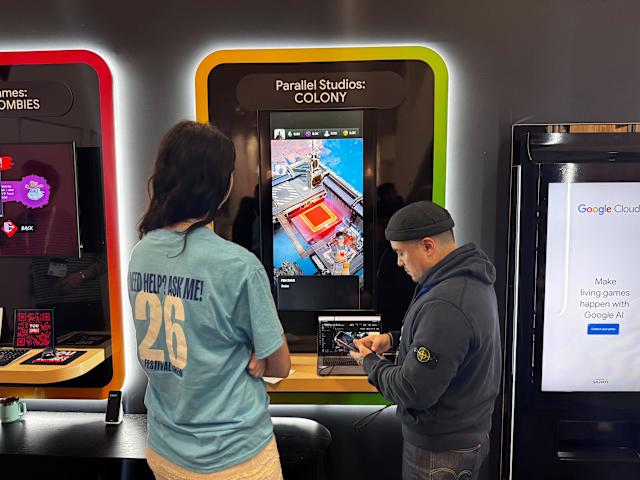
The integration of artificial intelligence into our daily lives feels like a recent phenomenon, but its roots are deeply intertwined with the evolution of video games. For over seventy years, these two fields have developed in tandem, with games serving as the perfect crucible for testing and refining AI models. Their structured rules and clear objectives provide an ideal environment for AI to learn, adapt, and demonstrate its capabilities, pushing the boundaries of what machines can achieve.
A History Forged in Pixels and Algorithms
From the early days of AI research, games have been instrumental. Arthur Samuel's groundbreaking checkers program in the 1950s, Samuel Checkers, introduced the concept of machine learning, allowing the AI to improve by analyzing past games. This laid the foundation for future advancements. The iconic victory of IBM's Deep Blue over chess grandmaster Garry Kasparov in 1997 marked a monumental leap, proving AI's strategic prowess. Further cementing AI's impact, IBM's Watson demonstrated advanced natural language processing by defeating human champions on the challenging quiz show Jeopardy! in 2011. The sophistication escalated with DeepMind's AlphaGo conquering the ancient and complex game of Go in 2016, showcasing the power of deep learning and neural networks to master intricate decision-making.
More Than Just a Testbed AI Enhances the Game
Beyond serving as a benchmark for AI capabilities, games have actively incorporated AI to enhance the player experience. The earliest examples can be seen in foundational titles like Pong, where AI controlled the opponent's paddle, offering a solo challenge. Classic arcade games such as Space Invaders and Pac-Man utilized AI to give enemies distinct behaviors and personalities, creating more dynamic and engaging encounters. The ghosts in Pac-Man, each with unique movement patterns and strategies, are a testament to this early integration.
The Rise of Intelligent Non-Player Characters
This evolution naturally led to the sophisticated non-player characters (NPCs) that populate modern gaming worlds. These characters, crucial for immersion and world-building, are driven by complex AI algorithms. In titles like Red Dead Redemption 2, NPCs exhibit intricate daily routines, interacting with their environment and other characters in a way that makes the game world feel alive and reactive. Their behaviors, from tending to virtual farms to engaging in conversations at a saloon, are meticulously crafted by AI to provide a richer, more believable experience.
AI's Role in Shaping Player Experience
Currently, AI is revolutionizing player engagement through personalized experiences. It can adapt game difficulty in real-time, tailor content to individual playstyles, and provide intelligent assistance. This ensures that games remain challenging yet accessible, catering to a diverse player base. AI's ability to understand player actions and preferences allows for a more bespoke gaming journey, deepening immersion and satisfaction.
Streamlining Development and Pushing Creative Boundaries
The influence of AI extends significantly into the game development pipeline. AI tools are now assisting in content generation, automating the creation of assets, environments, and even narrative elements. This frees up human developers to focus on more complex creative tasks. Furthermore, AI plays a vital role in debugging, identifying and resolving issues more efficiently, and in performance optimization, ensuring games run smoothly across various platforms. This symbiotic relationship allows for the creation of larger, more detailed, and technically impressive games.
The Future is Intelligent and Immersive
Looking ahead, the partnership between AI and gaming promises even more transformative developments. We can anticipate games that are not only more visually stunning and complex but also more accessible and inclusive. AI has the potential to break down barriers, offering adaptive interfaces and customized experiences for players with diverse needs. The capacity for AI to generate novel challenges and emergent narratives suggests a future where games are boundless in their creativity and interactivity.
A Continual Partnership for Innovation
As the gaming industry continues its rapid expansion, artificial intelligence is poised to be a central force shaping its trajectory. The ongoing innovation fueled by this collaboration will undoubtedly push the frontiers of realism, interactivity, and emergent gameplay, ensuring that the synergy between AI and games remains a powerful engine for the future of interactive entertainment.
Source Insight: This report was curated based on original coverage from illumin.usc.edu.
Explore Kri-Zek
📱 Altered Brilliance App
Download on Google Play · Watch the Trailer
📖 The Power of Gaming
Watch the Video
🤝 Connect With Us
Kri-Zek on LinkedIn · Founder on LinkedIn · Happenstance
📸 Follow Us on Instagram
@krizekster · @krizek.tech · @krizekindia