Badge
Apr 3, 2026
Democratizing Development The Rise of No Code App Builders
Discover how no-code app builders are revolutionizing software creation, enabling anyone to build complex applications without writing a single line of code.
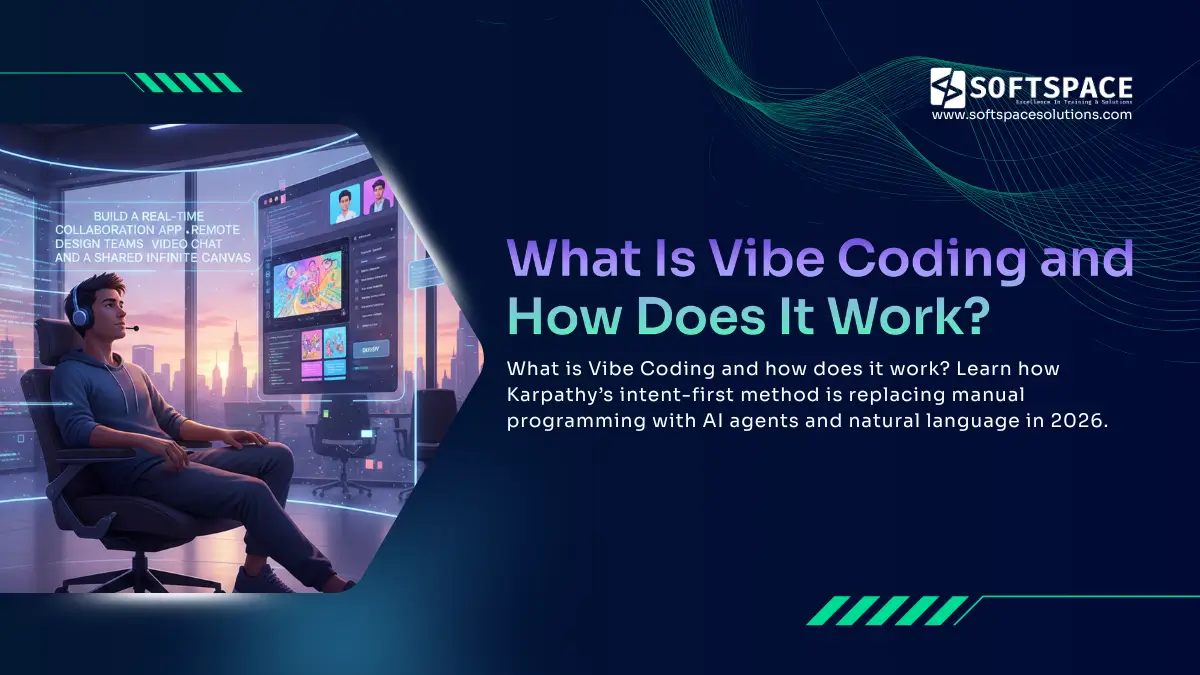
The landscape of software creation is undergoing a seismic shift, moving away from the traditional reliance on deep coding expertise or substantial financial investment. Today, no-code app builders are emerging as powerful tools, empowering individuals and businesses to transform innovative ideas into fully functional, production-grade applications without writing a single line of code. This evolution democratizes development, making app creation accessible to a broader audience than ever before.
At its core, a no-code app builder operates on a visual, drag-and-drop paradigm. Instead of intricate programming languages, users interact with a graphical user interface, assembling applications from pre-built components much like constructing with digital building blocks. This approach fundamentally simplifies the development process, abstracting away the complexities of underlying code.
Every application, regardless of its creation method, comprises three essential layers: the database, the user interface (UI), and the logic. The database serves as the central repository for all application data, from user profiles to product inventories. Robust no-code platforms offer intuitive ways to structure this data, establish relationships, and ensure security. Some platforms include integrated databases, while others, like WeWeb, provide the flexibility to connect with external backends, offering enhanced scalability and control.
The UI, or user interface, is the visual and interactive front-end of the application that users engage with. This includes screens, buttons, forms, and navigation elements. Advanced no-code builders offer granular control over design, enabling the creation of aesthetically pleasing, responsive, and user-friendly interfaces. The goal is to craft an experience that is both visually appealing and intuitively navigable.
Logic, often referred to as workflows or business logic, defines the application's behavior and functionality. It dictates the sequence of actions that occur in response to user interactions or data changes. For example, a workflow might automate the process of new user registration, including data entry, welcome notifications, and user redirection. This layer is crucial for transforming static designs into dynamic and interactive applications.
A recent development, dubbed "vibe coding," leverages AI to generate applications from natural language prompts, offering a conversational approach to development. While no-code platforms emphasize structured visual building for complex applications, vibe coding excels at rapid prototyping. The future, however, appears to be a hybrid, where platforms integrate AI-driven generation within visual editors, offering the speed of conversational AI with the precision and control of no-code development.
The versatility of modern no-code tools extends far beyond simple websites. Users can now develop sophisticated applications such as customer portals, internal management tools and CRMs, complex marketplaces, full-fledged Software as a Service (SaaS) products, AI-powered applications, and even mobile e-commerce apps for both iOS and Android. These applications can be deployed as responsive web applications, progressive web apps (PWAs), or native mobile applications, catering to diverse user access needs.
While the benefits of speed and cost savings are undeniable, offering rapid development cycles and reduced reliance on specialized developers, potential limitations exist. Scalability can be a concern for some platforms, emphasizing the importance of choosing tools that support backend flexibility. Furthermore, customization constraints may arise for highly unique functionalities, and vendor lock-in is a risk with some proprietary ecosystems. Prioritizing platforms that allow for code ownership and data portability is therefore paramount for long-term project viability.
The learning curve associated with no-code app builders is significantly gentler compared to traditional programming languages. Most users can grasp the fundamentals and begin building simple applications relatively quickly, making this technology an accessible entry point into the world of digital product creation.
Source Insight: This report was curated based on original coverage from weweb.io.
Explore Kri-Zek
📱 Altered Brilliance App
Download on Google Play · Watch the Trailer
📖 The Power of Gaming
Watch the Video
🤝 Connect With Us
Kri-Zek on LinkedIn · Founder on LinkedIn · Happenstance
📸 Follow Us on Instagram
@krizekster · @krizek.tech · @krizekindia