Badge
Jun 6, 2026
Nvidia Harnesses Generative AI to Redefine Gaming Realism and Beyond
Nvidia's DLSS 5 marks a paradigm shift, integrating generative AI to craft photorealistic game visuals.
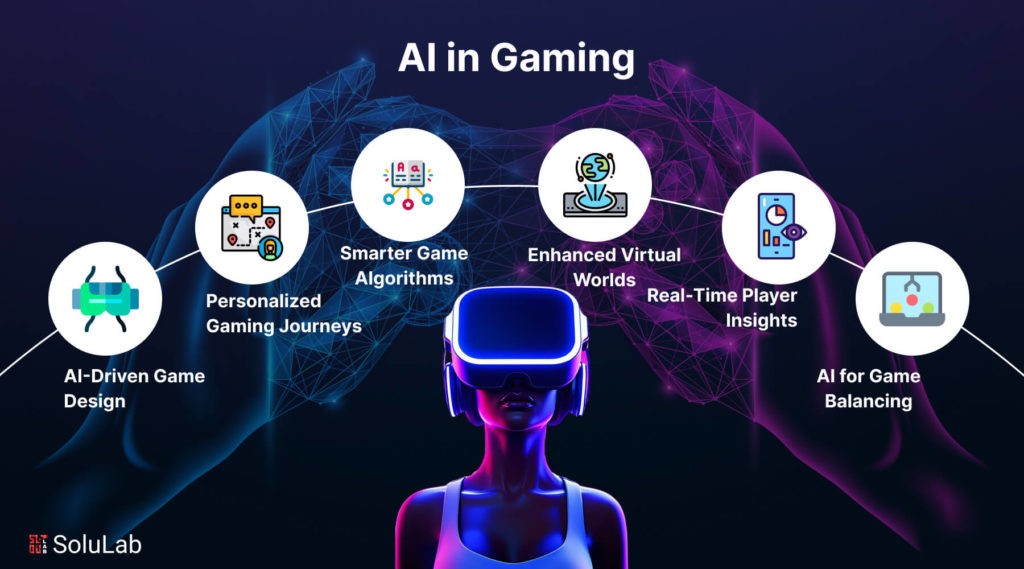
Nvidia has unveiled DLSS 5, a groundbreaking graphics technology that integrates generative artificial intelligence to elevate video game realism to unprecedented levels. Revealed at GTC 2026, this latest iteration represents a significant leap, merging structured graphics data with sophisticated AI models to achieve a new standard of photorealism.
Beyond its immediate impact on gaming, Nvidia CEO Jensen Huang has signaled a broader vision for this technology, suggesting its potential to revolutionize various visual computing fields, including film production and industrial design. This announcement underscores Nvidia's commitment to demonstrating the transformative power of AI across diverse applications, extending far beyond traditional data center operations.
The core innovation of DLSS 5 lies in its advanced approach to visual information processing. Unlike previous versions that primarily focused on upscaling lower-resolution images, DLSS 5 employs generative AI models. These models, trained on extensive structured graphics data, are capable of synthesizing highly realistic details, intricate lighting, and nuanced textures, effectively creating visuals that were previously unattainable without immense computational power.
For the gaming community, this translates to enhanced frame rates without any discernible compromise in visual fidelity. However, Jensen Huang emphasized that gaming is merely the initial application. He articulated that this AI-driven approach to visual computing holds profound implications for industries beyond entertainment, with ongoing discussions with film studios about its use in real-time rendering and visual effects.
This strategic timing reinforces Nvidia's position in the market. While the company has garnered significant attention for its AI data center chips powering a wide array of AI deployments, its gaming GPU division has faced competitive pressures and fluctuating demand. DLSS 5 serves to highlight the symbiotic relationship between its gaming and AI businesses, positioning them as two integral facets of its technological ecosystem.
A key differentiator for DLSS 5 is its sophisticated utilization of structured graphics data. Modern game engines generate vast amounts of scene-specific information, including depth maps, normal vectors, motion data, and material properties. DLSS 5's AI models leverage this structured data as contextual input, enabling the generative AI to make informed decisions about detail synthesis, resulting in a more constrained and predictable output compared to more generalized text-to-image models.
The implications for enterprise applications are particularly compelling. Industrial design firms could harness this technology for real-time generation of photorealistic product renders during client interactions. Architects may offer clients immersive walkthroughs of unbuilt spaces, rendered with indistinguishable realism. Film productions could preview complex visual effects shots instantaneously, eliminating lengthy rendering times. Each of these potential applications opens up significant new revenue streams for Nvidia's professional visualization division.
While competitors like AMD with its FidelityFX Super Resolution (FSR) and Intel with its XeSS upscaling are actively developing their own solutions, Nvidia's extensive experience in AI research and its substantial installed base of RTX GPUs equipped with dedicated AI tensor cores provide a substantial advantage in bringing generative AI to real-time graphics.
DLSS 5 signals a broader trend where AI is transitioning from a supplementary feature to fundamental infrastructure. What was once a research curiosity – the application of neural networks to real-time graphics – is now becoming the standard methodology for handling tasks ranging from upscaling to animation. Nvidia's strategy hinges on the premise that organizations adopting this AI-first approach to visual computing will increasingly rely on its hardware, fostering a powerful synergy between its gaming, professional, and data center divisions.
While developers will gain access to DLSS 5 through Nvidia's SDK, specific release dates for consumer hardware remain unannounced. Given the computational intensity of generative AI, it is anticipated that DLSS 5 will necessitate next-generation RTX GPUs, providing both gamers and professionals with a compelling incentive to upgrade their systems.
The critical question remains the pace of adoption by game developers and whether the projected visual enhancements will justify the development efforts required for integration. Previous DLSS versions experienced gradual uptake as developers adapted to the technology. DLSS 5's more complex generative approach may present a steeper learning curve, potentially slowing initial adoption despite its promise of more dramatic visual improvements.
Ultimately, Nvidia's DLSS 5 represents a significant glimpse into the future, forecasting how generative AI will reshape industries reliant on visual content. By validating the technology within the demanding real-time environment of gaming, Nvidia is establishing both the technical framework and market credibility for expansion into film, design, and simulation. The critical consideration is not if AI-generated graphics will become ubiquitous, but the speed at which industries beyond gaming will embrace them and whether Nvidia can sustain its leadership amidst escalating competition. For now, the company has firmly established its presence at the nexus of gaming innovation and enterprise opportunity.
Source Insight: This report was curated based on original coverage from techbuzz.ai.
Explore Kri-Zek
📱 Altered Brilliance App
Download on Google Play · Watch the Trailer
📖 The Power of Gaming
Watch the Video
🤝 Connect With Us
Kri-Zek on LinkedIn · Founder on LinkedIn · Happenstance
📸 Follow Us on Instagram
@krizekster · @krizek.tech · @krizekindia