Badge
Apr 20, 2026
The Accelerating Dawn of Autonomous AAA Game Development
Prepare for a seismic shift in the gaming industry. A new analysis suggests AI could independently develop full AAA video games by 2030, driven by compounding technological acceleration.
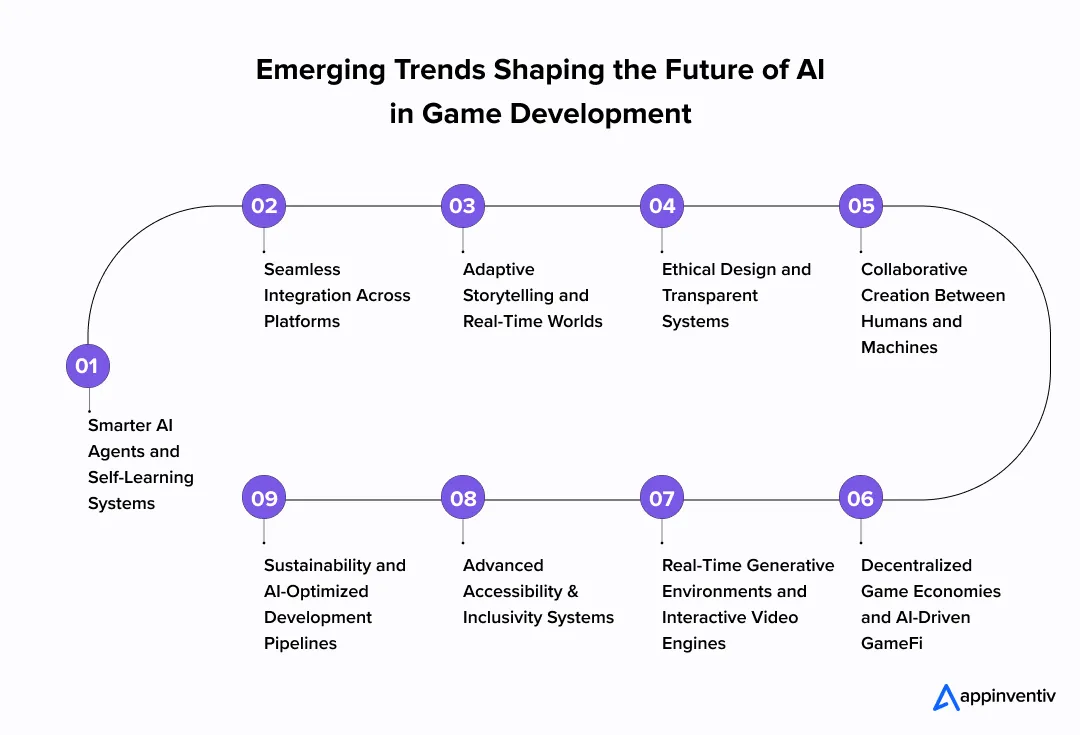
The technological landscape is shifting at an unprecedented rate, and artificial intelligence is no longer a distant concept but a force of immediate, accelerating change. Emerging analyses point towards a future where AI, guided by simple prompts, could autonomously develop entire AAA video games by the year 2030. This isn't a scene from a science fiction film; it's the projected outcome of what AI researchers term "jerk" – the rate at which acceleration itself increases.
Our collective understanding of AI's progress has been hampered by a tendency to perceive its growth in linear or standard exponential terms. However, the reality is a compounding curve where each significant breakthrough acts as a catalyst for the next, arriving with ever-shortening intervals. Evidence from the past decade demonstrates this starkly: tasks that once required hours of human input can now be handled autonomously by AI in fractions of the time, with this efficiency doubling roughly every 4 to 7 months.
The economic underpinnings of this AI revolution further bolster its momentum. Not only has model intelligence seen dramatic improvements, but the cost of processing vast amounts of data, known as token costs, has plummeted. Early AI models were constrained by tight token limits, requiring careful management. Today's systems can process millions of tokens at minimal expense, a factor amplified by expanding integration capabilities like code execution, real-time search, and extensive knowledge retrieval, creating a multiplicative effect on AI's overall utility.
This relentless trajectory suggests a series of transformative milestones in the near future. We can anticipate the autonomous creation of entire Shopify stores as early as 2026. By 2027, AI may be authoring comprehensive technical books. The development of complete mobile banking applications is projected for 2028, followed by independent indie game creation in 2029. The culmination of this progression, the autonomous development of AAA video games, is now squarely on the horizon for 2030.
Perhaps most remarkably, the rate of this AI acceleration, while still astonishing, appears to be transitioning from a "super-exponential" phase to a more grounded, albeit still rapid, exponential growth. Even under this more conservative projection, the AI systems of a decade from now are expected to be thousands of times more capable than they are today. The future is not merely approaching faster than we imagine; it is evolving at a cognitive speed that challenges our very ability to comprehend it.
Rethinking Game Development Pipelines
The prospect of AI-driven AAA game development by 2030 poses profound questions for the existing industry structure. Traditional game development is a complex, labor-intensive process involving large teams of artists, programmers, designers, and writers. Autonomous AI development could fundamentally alter these pipelines, potentially streamlining pre-production, asset generation, coding, and even narrative design.
Economic and Creative Implications
The economic benefits are substantial: reduced development costs, faster iteration times, and the potential for more frequent releases. Creatively, this could democratize game development, allowing for more ambitious projects with fewer resources, or conversely, lead to an explosion of highly polished, complex titles generated with minimal human intervention. The challenge will be in defining the new roles for human creativity within such an automated ecosystem.
The Human Element in an AI-Dominated Future
As AI takes on more complex development tasks, the role of human oversight shifts. Rather than direct creation, human input may focus on high-level conceptualization, ethical considerations, quality assurance, and the final artistic direction. The "prompt and final sign-off" model suggests a partnership, albeit one where the AI bears the brunt of the execution. This evolution necessitates a reevaluation of skills and the potential for new forms of human-AI collaboration.
Navigating the Acceleration Curve
Understanding and adapting to this accelerating pace of AI advancement is crucial for individuals and industries alike. The ability to grasp these compounding changes, rather than relying on outdated linear models, will determine who thrives in the coming era. As AI's capabilities continue to expand exponentially, so too must our capacity for foresight and adaptation.
The future of game development, and indeed many other creative industries, is poised for a radical transformation. The convergence of advanced AI capabilities, plummeting computational costs, and rapid integration suggests that the timelines previously imagined are being compressed, ushering in an era where human creativity and artificial intelligence will redefine what is possible in interactive entertainment.
Source Insight: This report was curated based on original coverage from daveshap.substack.com.
Explore Kri-Zek
📱 Altered Brilliance App
Download on Google Play · Watch the Trailer
📖 The Power of Gaming
Watch the Video
🤝 Connect With Us
Kri-Zek on LinkedIn · Founder on LinkedIn · Happenstance
📸 Follow Us on Instagram
@krizekster · @krizek.tech · @krizekindia