Badge
Jun 27, 2026
The Age of AI-Assisted Game Development: A Deep Dive into 'Vibe Coding' an MMO
Explore the revolutionary concept of 'vibe coding' in game development, where AI serves as a co-pilot, enabling rapid prototyping and the creation of complex games like an MMO battle royale in reco...
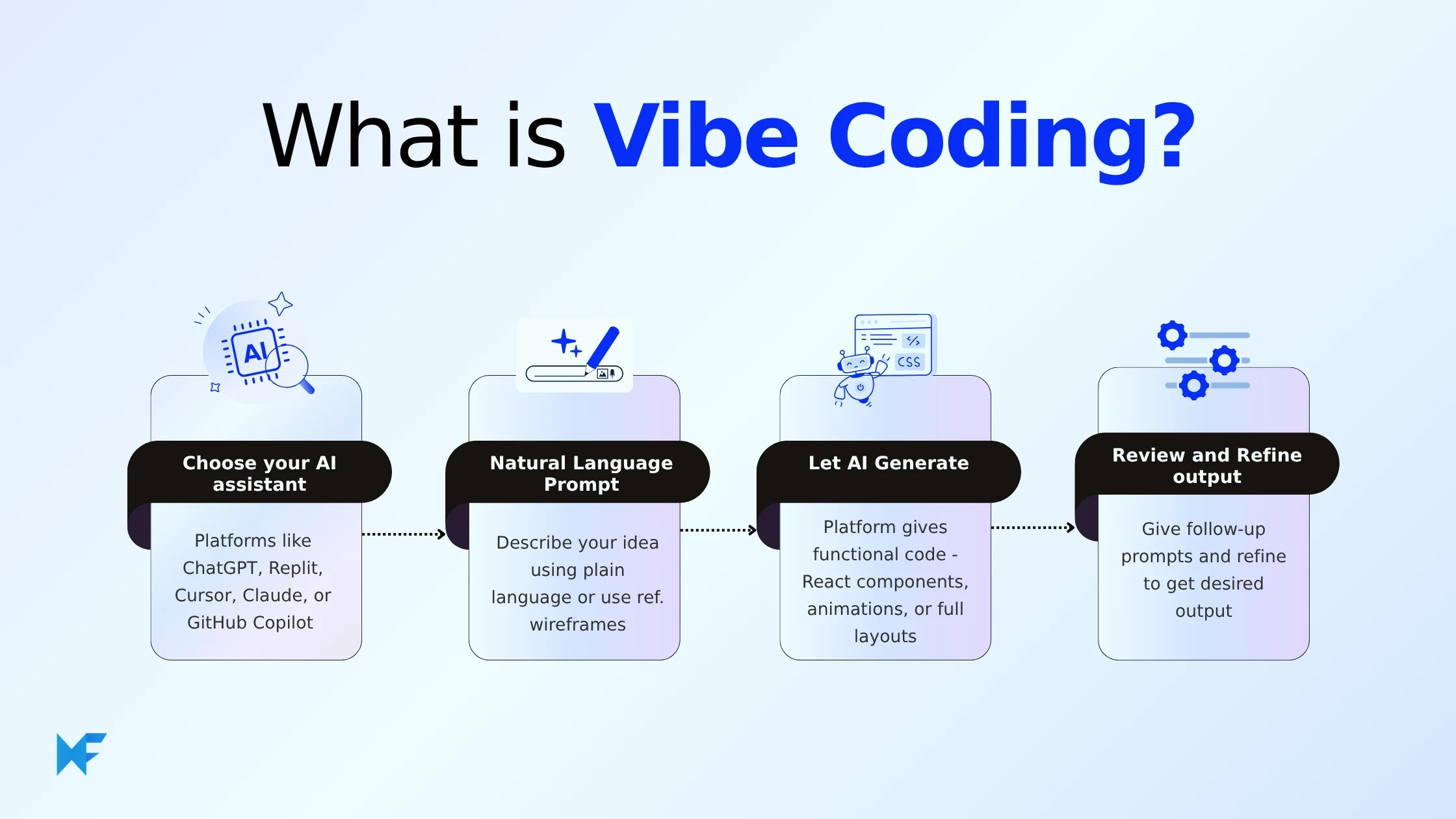
The gaming landscape is constantly evolving, driven by innovation in technology and creative methodologies. A new paradigm, often termed 'vibe coding,' is emerging, fundamentally altering how developers approach complex projects. This concept is epitomized by an experimental endeavor to build a fully functional Massively Multiplayer Online (MMO) game, a 2D Battle Royale, with Artificial Intelligence serving as the primary development assistant. The remarkable success of this project unveils the profound potential of AI in expediting development cycles and democratizing game creation.
The Birth of a 'Vibe Coded' MMO
Traditional game development, particularly for real-time multiplayer experiences, is a laborious and intricate process, often demanding extensive planning, specialized teams, and significant resources. The 'vibe coding' approach, however, flips this paradigm. Instead of rigorous upfront design, the developer operates with a generalized concept, allowing generative AI tools to interpret and execute the technical details. This iterative, almost improvisational workflow culminated in Vibe Rumble, a barebones yet functional 2D Battle Royale MMO, created in a surprisingly short timeframe – a testament to the efficiency of AI collaboration.
Dissecting the Gameplay and Architecture
Vibe Rumble offers a minimalist, chaotic, and engaging experience. Players connect, choose a name, and are plunged into a procedurally generated pixelated world where they engage in fast-paced combat. The core loop involves exploration, combat, and quick respawns, emphasizing immediate action over intricate mechanics. Despite its apparent simplicity, the underlying architecture showcases a robust, full-stack implementation.
Frontend capabilities are handled entirely within the browser using HTML, CSS, and vanilla JavaScript. Remarkably, the game eschews popular engines like Phaser or Unity WebGL, opting for a custom renderer built directly on the DOM canvas. This choice highlights a lean development philosophy, prioritizing direct control and performance. The client-side manages rendering, input, UI, and network communication, receiving a seed from the server for consistent procedural map generation across all players.
On the backend, the game leverages Go, a language renowned for its concurrency and performance, ideal for server-side logic in real-time applications. This server is the authoritative source for all game states, managing player sessions, world generation, and verifying client actions. Communication between frontend and backend is meticulously optimized using UDP over WebRTC, ensuring ultra-low latency—a critical factor for responsive multiplayer gameplay. Even granular optimizations, such as bit-packing frequent data like player positions, underscore the dedication to network efficiency.
The Power of the AI Co-Pilot
The most striking aspect of this project isn't just the game itself, but the methodology behind its creation. The developer effectively delegated the role of a junior developer to AI tools, feeding them high-level instructions and receiving functional code snippets or architectural suggestions in return. This wasn't a hands-off approach; rather, it required a developer highly skilled in identifying and segmenting complex problems into micro-tasks that AI could effectively tackle. The process demanded constant supervision, validation, and correction of AI outputs, but ultimately accelerated development exponentially. This collaborative model transforms the developer into an architect and editor, rather than a code-from-scratch engineer.
Implications for Game Development
The success of Vibe Rumble carries significant implications for the future of game development. For indie developers and small studios, AI-assisted 'vibe coding' could dramatically lower the barrier to entry for creating complex multiplayer experiences, offering a pathway to rapidly prototype and iterate on ideas that were previously out of reach due to technical overhead. The ability to quickly manifest an idea into a playable prototype not only saves time and resources but also fosters a more experimental and creative development environment.
Beyond indie development, this methodology signals a broader shift in the industry. As AI tools become more sophisticated, they will likely integrate deeper into established workflows, freeing human developers to focus on higher-level design, narrative, and innovative mechanics. The focus may shift from writing lines of code to intelligently prompting, debugging, and integrating AI-generated solutions. This could lead to a significant increase in development velocity and potentially, a more diverse array of games.
Challenges and the Human Element
While promising, 'vibe coding' with AI is not without its challenges. The developer emphasized the need to 'babysit the AI,' breaking down tasks into minute steps and rigorously validating every output. This highlights that AI, in its current state, is a powerful tool requiring skilled human oversight, not a replacement for human expertise. Understanding the underlying technologies and possessing strong debugging skills remain paramount. The creative spark, the overarching vision, and the critical eye for polished gameplay still firmly reside with the human developer.
In conclusion, the experiment with Vibe Rumble serves as a compelling case study for AI's transformative impact on game development. It demonstrates that with the right approach, even ambitious projects like MMOs can be brought to life with unprecedented speed, ushering in an exciting era where code generation and human creativity synergize to redefine the boundaries of what's possible in gaming.
Source Insight: This report was curated based on original coverage from medium.com.
Explore Kri-Zek
📱 Altered Brilliance App
Download on Google Play · Watch the Trailer
📖 The Power of Gaming
Watch the Video
🤝 Connect With Us
Kri-Zek on LinkedIn · Founder on LinkedIn · Happenstance
📸 Follow Us on Instagram
@krizekster · @krizek.tech · @krizekindia