Badge
Jun 6, 2026
The AI Evolution in Game Development: Beyond the Hype into Collaborative Creation
AI in game development is moving beyond hype, integrating into workflows as a co-developer.
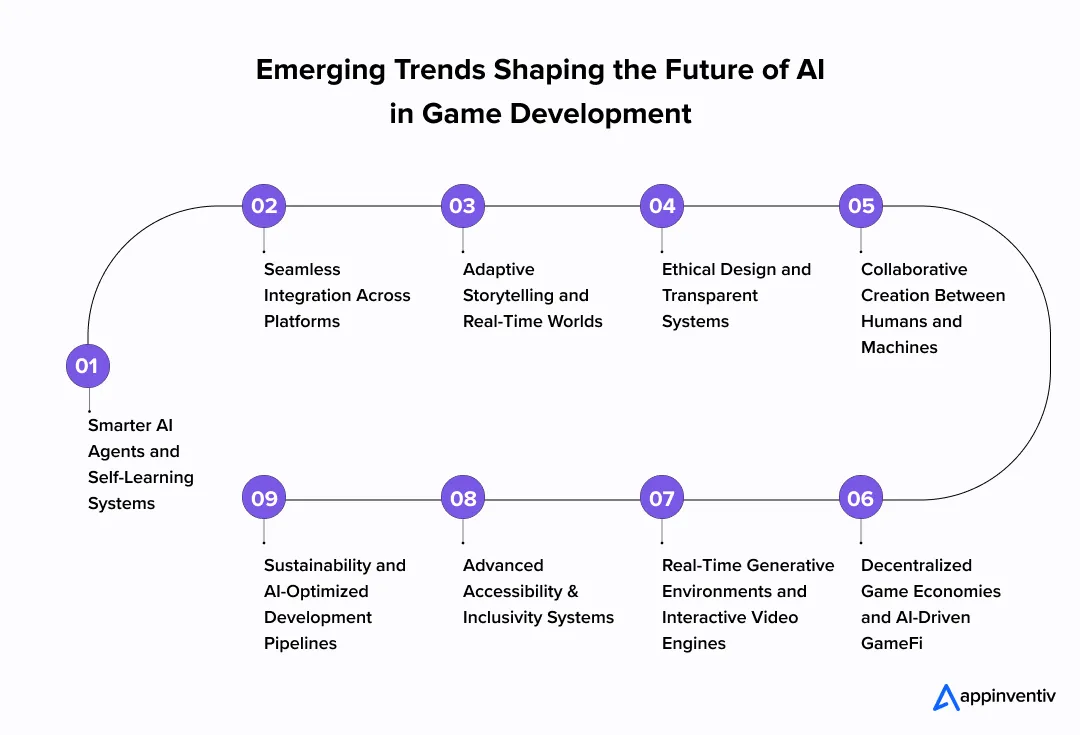
AI in game development has transitioned from a speculative concept to an integral part of modern production. Far from replacing human talent, AI is fundamentally reshaping how development teams build, test, and scale their projects. As we look towards 2025-2026, AI tools are becoming faster, more sophisticated, and deeply embedded into workflows, heralding a new era of collaborative creation.
Developer Sentiment and Shifting Use Cases
The recent Unity Gaming Report 2025 indicates a significant majority of developers now embrace AI tools. While adoption rates have remained relatively stable year-over-year, the application of AI has evolved dramatically. Developers are increasingly leveraging AI not as a singular creative solution, but as a versatile tool within their existing ecosystem, prioritizing efficiency and targeted support.
The Rise of Support-Focused AI
Interestingly, the data reveals a slight downturn in creative AI applications like AI-assisted content generation and concept art. Conversely, there's a marked increase in the adoption of AI for support functions such as automation, testing, and code generation. This trend suggests AI is currently most potent when augmenting existing pipelines, bolstering efficiency and reducing repetitive tasks, rather than driving core creative ideation.
Evolving from Helper to Co-Developer
The trajectory of AI in game development points towards an "AI co-developer" model. This evolution promises to significantly expand the capabilities of small and mid-sized teams. Key areas ripe for AI-driven transformation include asset generation, where AI-assisted tools can rapidly produce placeholders and variations, significantly speeding up the prototyping phase. GIANTY's own AI Pixel Tool exemplifies this, enabling faster visual prototyping with consistent pixel-style mockups.
Lifelike NPCs and Personalized Experiences
Perhaps one of the most impactful shifts will be seen in Non-Player Character (NPC) behavior. AI-driven NPCs are poised to become more lifelike, exhibiting emotional depth and context-aware interactions, moving beyond scripted responses. This advancement, coupled with AI-driven personalization, will enable games to offer adaptive, hyper-personalized storytelling, creating truly dynamic player journeys.
Enhancing Game Safety and Design
AI's influence extends to enhancing game safety, both within virtual worlds and online communities. By shifting safety systems from reactive to predictive, AI can proactively identify and mitigate risks. Furthermore, AI is beginning to assist in game design by analyzing player data to identify engagement patterns and potential design flaws, empowering designers to make more informed decisions and extend their creative reach.
Preparing for an AI-Integrated Future
To harness the full potential of AI, studios must cultivate AI-ready pipelines. This involves breaking down complex tasks, using AI for initial drafts, and integrating human artistry for refinement. The emphasis is on speed and iteration, making rapid prototyping the dominant paradigm. Studios that maintain heavy, linear production models risk falling behind.
The Hybrid Team of the Future
The future of game development lies in the synergy between humans and AI. Developers will increasingly need to cultivate hybrid skillsets, blending traditional game development expertise with an understanding of AI tools and prompt engineering. This collaborative approach, where human creativity is amplified by AI acceleration, will define the most successful studios, allowing them to achieve the velocity of large teams without the associated overhead.
Embracing AI as a Multiplier
The prevailing sentiment is that AI acts as a multiplier, not a replacement. By integrating AI-powered tools across prototyping, art, animation, and coding, studios can gain a significant competitive advantage. As AI technology matures, early adopters will reap the greatest rewards. Collaboration with AI is no longer a distant prospect but a present imperative for studios aiming to innovate and thrive in the evolving landscape of game development.
Source Insight: This report was curated based on original coverage from gianty.com.
Explore Kri-Zek
📱 Altered Brilliance App
Download on Google Play · Watch the Trailer
📖 The Power of Gaming
Watch the Video
🤝 Connect With Us
Kri-Zek on LinkedIn · Founder on LinkedIn · Happenstance
📸 Follow Us on Instagram
@krizekster · @krizek.tech · @krizekindia