Badge
Apr 12, 2026
The AI Revolution in App Development
Discover how AI app builder tools are transforming software creation. Explore the leading platforms and understand their impact on innovation and accessibility for developers and non-technical foun...
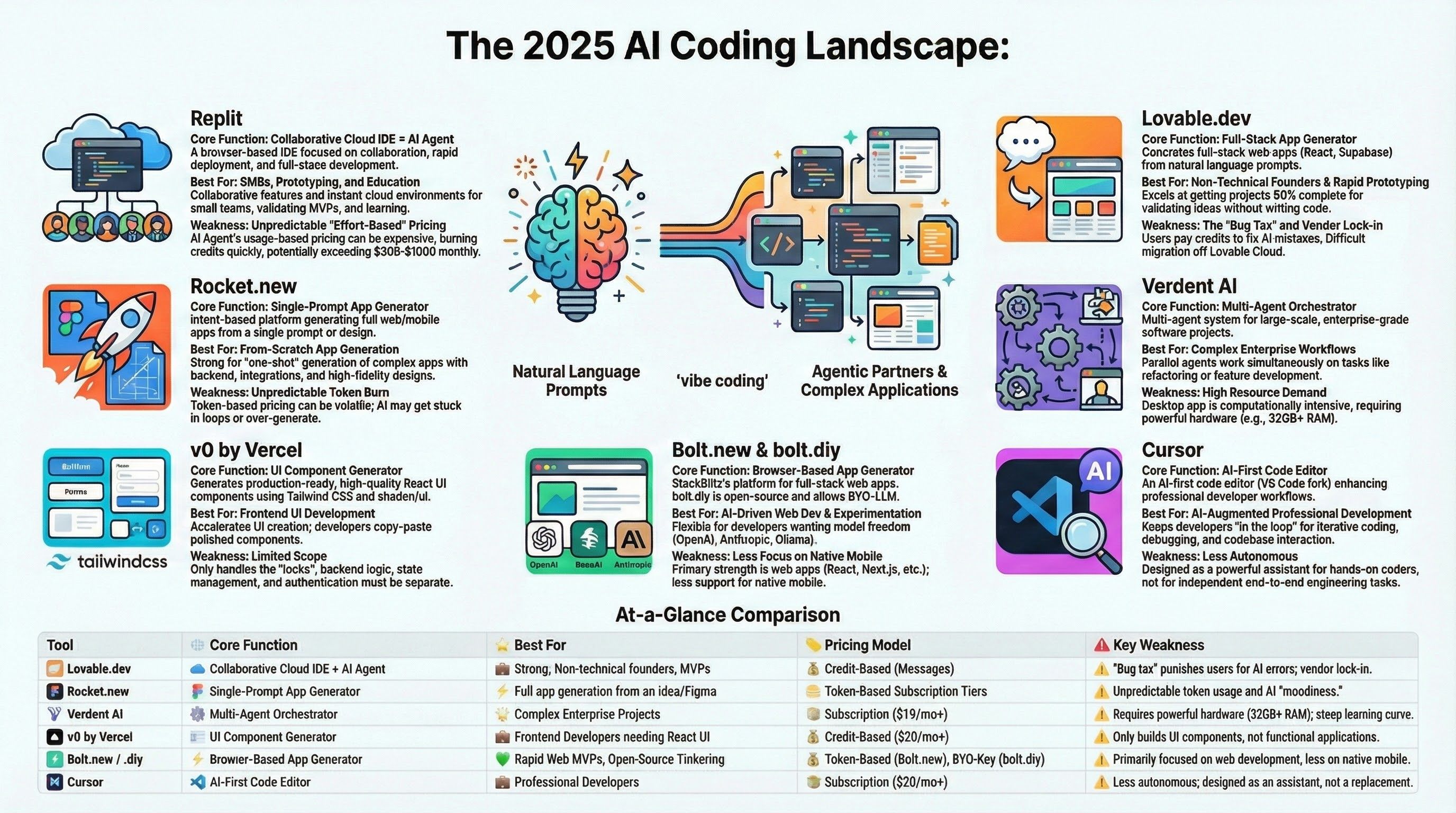
The landscape of application development is undergoing a seismic shift, driven by the rapid advancement of Artificial Intelligence. In 2026, AI app builder tools are no longer a futuristic concept but a tangible reality, democratizing the creation of sophisticated software. These platforms leverage natural language processing and machine learning to translate human-defined ideas into functional applications, drastically reducing the time and technical expertise traditionally required.
At their core, AI app builders act as intelligent assistants, interpreting user prompts to generate code, design user interfaces, and manage backend logic. This paradigm shift moves the focus from intricate coding syntax to conceptual clarity, enabling individuals with compelling ideas but limited programming backgrounds to bring their visions to life. The burgeoning no-code and low-code market, projected to exceed $65 billion by 2027 according to Statista, underscores the immense demand for such accessible development solutions.
What truly sets these AI tools apart is their ability to streamline the entire development lifecycle. From initial concept to a deployable application, the process can now be measured in hours rather than months. This acceleration is fueled by built-in AI assistants that can identify and rectify errors, optimize workflows, and facilitate seamless integrations with essential services like Google Sheets, cloud storage, and third-party APIs. This comprehensive approach means that full-stack development, encompassing frontend, backend, and database management, can often be handled within a single platform.
When evaluating AI app builder tools, several key features stand out. The efficacy of natural language prompts is paramount, allowing users to describe desired functionalities in plain English. A robust visual editor complements this, providing intuitive drag-and-drop interfaces for UI design without the need for manual coding. Furthermore, the platform's capability to handle backend logic autonomously, including user authentication and data management, is crucial for building complete, functional applications.
The ability to integrate with external services via API keys is another critical consideration, enabling connections to payment gateways, specialized AI models, or other critical business tools. Features like code export offer an added layer of flexibility, allowing seasoned developers to take the AI-generated foundation and refine it further in traditional development environments. Finally, the availability of a generous free plan allows users to explore capabilities before committing to paid tiers, ensuring accessibility for a wide range of users.
Among the leading contenders in 2026, platforms like Rocket.new are pushing the boundaries with comprehensive natural language-driven app generation. Bubble AI offers a powerful synergy of visual editing and backend logic management, while Glide excels in its seamless integration with spreadsheet data. Adalo provides a strong focus on building native mobile applications, and Softr AI offers intuitive solutions for web applications and client portals. FlutterFlow AI bridges the gap for those seeking to leverage Google's Flutter framework with AI assistance.
The rise of AI app builders also sparks important conversations about the nature of development itself. Compared to traditional, code-intensive methods, these AI tools offer unparalleled speed and reduced barrier to entry. This democratizes innovation, allowing a broader spectrum of creators to participate in the digital economy.
For beginners, the appeal is undeniable. The intuitive interfaces and AI-powered guidance demystify app creation, transforming what was once an intimidating process into an engaging, iterative journey. While the learning curve is significantly flattened, understanding the potential limitations and nuances of AI-generated code is essential for professional-grade results. Vigilance regarding data security, platform dependencies, and the potential for AI to introduce subtle complexities is advised.
Ultimately, AI app builders represent a fundamental redefinition of how applications are conceived and created. They are game-changers, empowering individuals and businesses to innovate faster, adapt more quickly to market demands, and build the digital tools of tomorrow with unprecedented efficiency and accessibility.
Source Insight: This report was curated based on original coverage from rocket.new.
Explore Kri-Zek
📱 Altered Brilliance App
Download on Google Play · Watch the Trailer
📖 The Power of Gaming
Watch the Video
🤝 Connect With Us
Kri-Zek on LinkedIn · Founder on LinkedIn · Happenstance
📸 Follow Us on Instagram
@krizekster · @krizek.tech · @krizekindia