Badge
Apr 1, 2026
The AI Revolution in Gaming: Shaping Worlds and Experiences
Artificial intelligence is no longer a futuristic concept in gaming. In 2026, AI is actively transforming game development and player experiences, from generating vast game worlds to creating deepl...
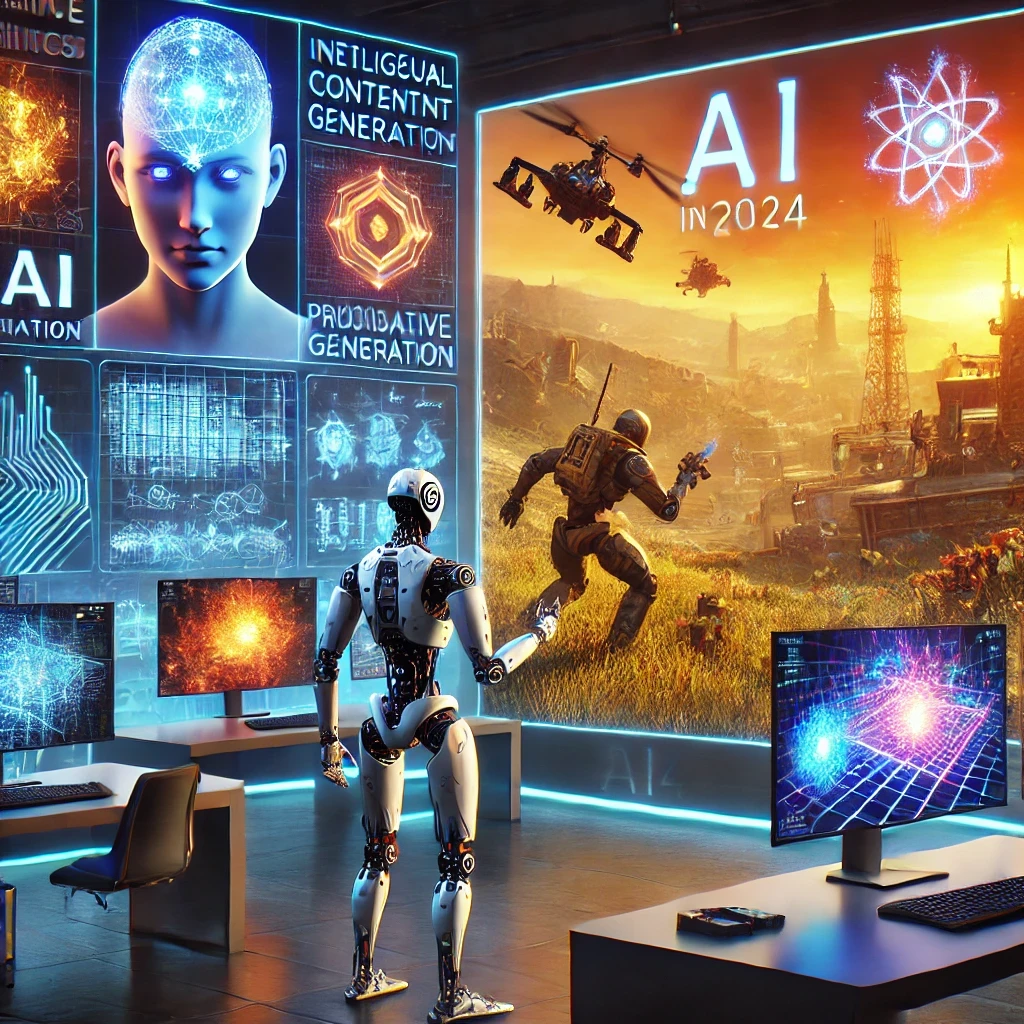
Artificial intelligence is fundamentally reshaping how games are made, played, and experienced. In 2026, games with AI span from adaptive NPCs that learn from player behavior to entirely AI-generated game worlds. This guide explores the complete landscape of AI in gaming—what it means, how it works, and how you can create AI-powered games yourself.
What Are Games with AI?
Games with AI are video games that incorporate artificial intelligence in their design, development, or gameplay mechanics. This includes AI-driven NPCs with dynamic dialogue and adaptive behavior, procedural generation of worlds and content by AI algorithms, AI-generated assets like graphics and music, AI-assisted development tools, and adaptive gameplay systems that respond to player skill and preferences. The term has evolved significantly from basic pathfinding to encompass large language models powering conversational NPCs and generative AI creating game assets in real-time.
Types of AI in Games
Intelligent NPCs and Dialogue Systems Modern AI enables non-player characters to hold natural conversations, remember past interactions, and respond contextually to player choices. Key capabilities include conversational AI powered by large language models, memory systems for characters to recall player actions, emotional intelligence for nuanced responses, and dynamic storytelling that branches based on AI-generated dialogue. Platforms now integrate AI NPCs that create unique interactions for each player, going beyond traditional dialogue trees with contextually appropriate responses in real-time.
Procedural Content Generation Procedural generation uses AI algorithms to create game content dynamically rather than through manual design. AI can generate vast terrain and environments, complex level layouts, unique quests and missions, item systems with randomized properties, and even adaptive music and soundscapes. This dramatically expands game worlds, as seen in titles like No Man's Sky with its quintillions of procedurally generated planets or Minecraft's infinite worlds. It also offers significant performance benefits, reducing file sizes by 60-80%.
AI-Generated Assets Generative AI is revolutionizing asset creation, producing models, textures, animations, and music. Tools can now generate 3D characters with animations in seconds, and background music tracks in under two minutes. This capability drastically reduces development time for assets, with AI potentially cutting asset creation time by 95%. Platforms like SEELE allow users to generate complete games, including 3D characters and animations, from text descriptions in mere minutes.
Adaptive Opponents and Gameplay AI can create opponents that learn from player behavior, adapting their strategies to provide a persistent challenge. This adaptive AI ensures that encounters remain engaging and tailored to the player's skill level. Furthermore, AI can dynamically adjust game difficulty in real-time, ensuring a balanced and enjoyable experience for players of all abilities.
AI-Assisted Development AI is becoming an indispensable tool for game developers. AI-powered platforms enable non-programmers to create games from text prompts in minutes, democratizing game development. For experienced developers, AI APIs can be integrated into game engines like Unity and Unreal Engine to enhance functionality. Studios can also train custom AI models for highly specific needs, though this requires significant expertise and resources.
Key Statistics and Development Impact (2026)
In 2026, the impact of AI on development timelines and costs is profound. AI reduces game development time by up to 95% for asset creation, with 3D characters and animations taking as little as 60-90 seconds compared to 40-60 hours manually. Complete game prototypes can be generated in minutes rather than weeks or months. For an indie 2D platformer, AI-assisted development can reduce costs by an estimated 95%, from around $105,000 for traditional development to $5,200 with AI integration. This efficiency makes game creation accessible to a much wider audience.
Future Trends in AI Gaming (2026-2028)
The next few years will see even more advanced AI integration. World models will enable AI to simulate game worlds with consistent physics and causality, leading to unprecedented immersion. Real-time voice NPCs with minimal latency will facilitate natural, fluid conversations. AI-driven level design will allow for dynamic generation of layouts based on design intent descriptions. Ultimately, AI will transition from a novel marketing feature to standard, essential infrastructure in game development and design.
Best Practices for AI Integration
To effectively leverage AI in game development, several best practices are recommended. Starting with AI-generated assets and refining them manually for polish ensures quality. Combining procedural generation with hand-crafted key moments can create unique yet coherent experiences. Extensive testing of conversational AI, including content filtering, is crucial. Implementing gradual adaptive difficulty adjustments rather than sudden changes will maintain player flow. Finally, using platforms with clear commercial licensing for AI content is essential for commercial projects.
Source Insight: This report was curated based on original coverage from seeles.ai.
Explore Kri-Zek
📱 Altered Brilliance App
Download on Google Play · Watch the Trailer
📖 The Power of Gaming
Watch the Video
🤝 Connect With Us
Kri-Zek on LinkedIn · Founder on LinkedIn · Happenstance
📸 Follow Us on Instagram
@krizekster · @krizek.tech · @krizekindia