Badge
Apr 21, 2026
The AI Revolution in Software Development A Glimpse into 2026
Vibe coding, once a niche concept, is now mainstream. Explore how AI-assisted development is reshaping software creation and its profound impact on developers, businesses, and the future of technol...
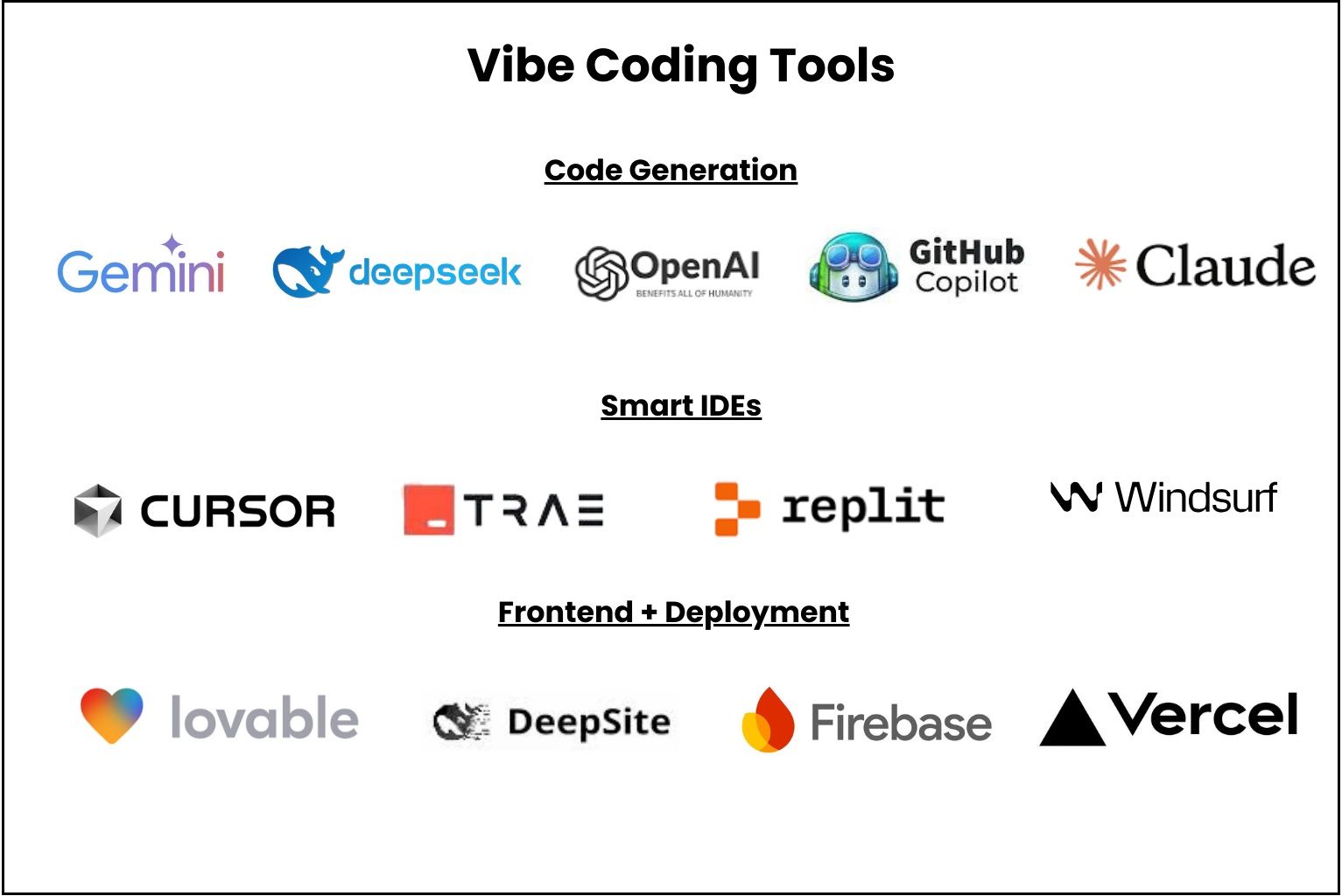
The landscape of software development has undergone a seismic shift, with vibe coding emerging not just as a trend, but as a fundamental pillar of modern development. Recognized as Collins Dictionary Word of the Year for 2025, this AI-assisted approach now dictates the daily workflow for an astonishing 85% of developers. Understanding the current state and future trajectory of vibe coding is no longer optional for those involved in building software.
The core of vibe coding lies in its natural language interface. Developers articulate their desired outcomes in plain English, allowing Large Language Models (LLMs) to translate these intentions into production-ready code. This conversational iteration, as opposed to manual code editing, significantly lowers the barrier to entry, making app development more accessible to a wider audience. This paradigm shift is vividly illustrated by the burgeoning market for AI coding tools, which commanded a $7.37 billion valuation in 2025 and continues its rapid ascent.
By early 2026, the integration of AI into the development lifecycle is undeniable. Statistics reveal that over 90% of developers in the US are actively using AI coding assistants, with AI contributing to a substantial 41-46% of all global code. This rapid adoption is mirroring the rapid evolution of AI capabilities. Fortune 500 companies have embraced this transformation, with 87% integrating AI into their development processes, indicating a broad industry acceptance and reliance.
The future of vibe coding points towards an increasingly sophisticated ecosystem of agentic software creation. The focus is rapidly expanding beyond initial code generation to encompass the entire software lifecycle, including maintenance, scaling, and debugging. AI agents are gaining autonomy, equipped with access to terminals and deployment tools, enabling them to execute complex, multi-step development tasks.
Furthermore, the concept of Repository Intelligence is taking root, with AI systems demonstrating an understanding of codebase history and architecture, allowing for contextually aware suggestions. The visual aspect of development is also being revolutionized, with new tools enabling users to design interfaces on a canvas while AI generates the underlying code, blending creativity with automation.
However, this rapid advancement is not without its challenges. The emergence of "technical debt hangover" is a growing concern, with projections of a $1.5 trillion debt by 2027 attributed to AI-generated code. A significant portion of junior developers admit to deploying code they do not fully comprehend, highlighting the critical need for robust oversight and robust security checks within AI-generated code.
The impact on the job market is a subject of intense discussion. While fears of widespread developer replacement persist, data suggests a more nuanced evolution of roles. Projections indicate continued job growth for software developers, but with a significant redefinition of responsibilities. The emphasis is shifting from manual coding to AI orchestration and system architecture, requiring developers to hone skills in guiding and collaborating with AI.
Junior developer roles are experiencing a notable contraction, with a drop in entry-level hiring at top tech firms. This underscores the importance for aspiring developers to cultivate AI collaboration skills and gain hands-on experience with AI-assisted tools. The path forward involves adapting to these evolving demands, focusing on problem-solving, critical thinking, and the uniquely human aspects of software creation that AI cannot replicate.
The ongoing improvements in AI models, including larger context windows, enhanced reasoning capabilities, and better security detection, promise to further refine the vibe coding experience. While current limitations like debugging AI code and ensuring code quality persist, the trajectory points towards a future where AI and human developers collaborate seamlessly to build the next generation of software.
Source Insight: This report was curated based on original coverage from natively.dev.
Explore Kri-Zek
📱 Altered Brilliance App
Download on Google Play · Watch the Trailer
📖 The Power of Gaming
Watch the Video
🤝 Connect With Us
Kri-Zek on LinkedIn · Founder on LinkedIn · Happenstance
📸 Follow Us on Instagram
@krizekster · @krizek.tech · @krizekindia