Badge
Apr 4, 2026
The AI Revolution in Software Development: Embracing Vibe Coding and Intelligent Assistants
Artificial intelligence is transforming how software is built. Discover the rise of 'vibe coding,' intelligent assistants like GitHub Copilot, and how they're reshaping developer workflows, while a...
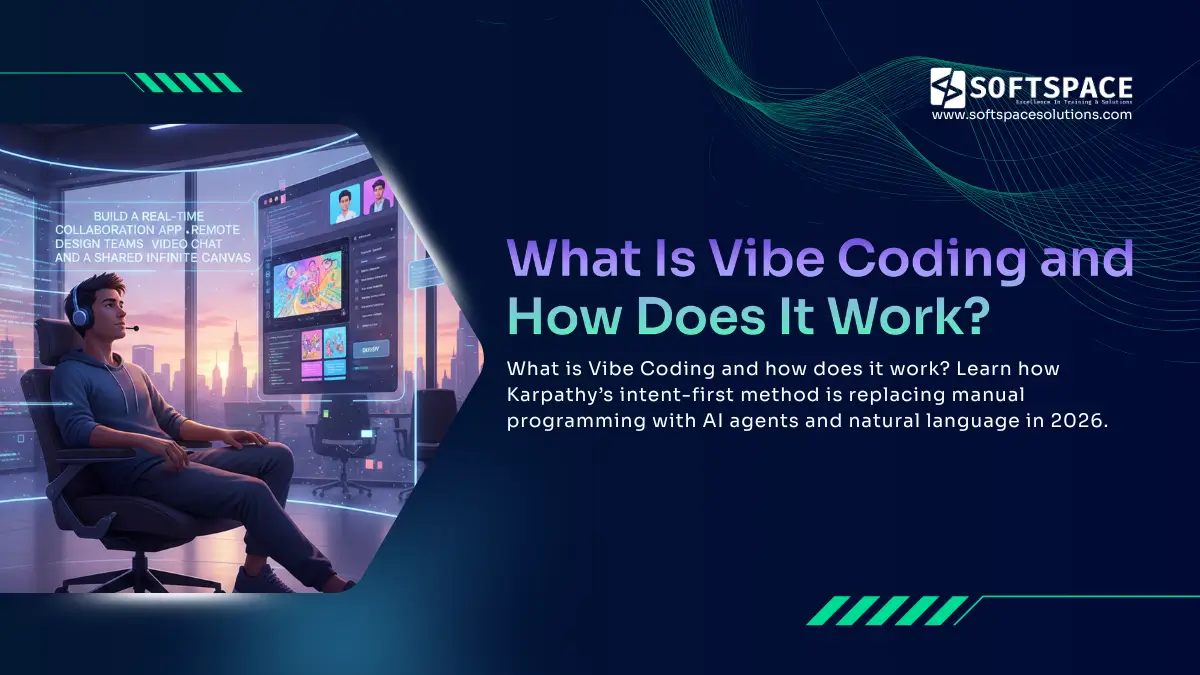
The world of software development is undergoing a seismic shift, propelled by the rapid advancements in artificial intelligence. Gone are the days when coding was solely a domain of rigid syntax; we are entering an era of more intuitive, natural language-driven programming, often dubbed vibe coding. This evolution is powered by sophisticated AI code assistants, integrated into popular development environments, that can interpret human intent and translate it into functional code.
The Dawn of Vibe Coding and AI Assistants
Vibe coding represents a fundamental change in how developers interact with their tools. Instead of meticulously crafting every line of code with precise syntax, developers can now articulate their needs in plain language. Phrases like "sort this data by user ID" or "create a function to validate email addresses" are understood by AI, which then generates the relevant code. This approach significantly lowers the barrier to entry and amplifies the productivity of experienced coders.
Leading the Charge: AI Code Assistants in Action
Several powerful AI tools are at the forefront of this transformation. GitHub Copilot, built on OpenAI's Codex, offers intelligent code suggestions, from single lines to entire functions. Cursor provides context-aware completions and enables natural language queries directly within the code editor. Amazon CodeWhisperer integrates seamlessly with AWS services, offering tailored recommendations, while Tabnine learns from user coding styles to provide personalized completions. These assistants are typically integrated into Integrated Development Environments (IDEs), making them an organic part of the developer's workflow.
Reshaping Developer Workflows for Enhanced Productivity
The impact of these AI tools on developer workflows is profound. They excel at automating boilerplate code generation, freeing up developers from tedious, repetitive tasks. The contextual recommendations they provide are often nuanced and highly relevant, saving significant time. Furthermore, AI assistants act as valuable debugging and refactoring companions, helping to identify and correct errors early in the development cycle and continuously improving code quality. For junior developers, these tools serve as excellent learning aids, exposing them to idiomatic coding patterns and best practices.
Fostering Collaboration and Broader Innovation
Beyond individual productivity, AI is enhancing collaborative development. These tools can facilitate more effective pair programming, streamline code reviews, and assist in the creation of comprehensive documentation, ensuring that knowledge is shared and maintained efficiently within teams. Perhaps most significantly, AI-powered development is contributing to the democratization of coding. Individuals with strong domain expertise but limited programming skills can now leverage natural language to contribute to software creation, opening up new avenues for innovation across various industries.
Real-World Impact: AI in Practice
Major technology players are already reaping the benefits. Microsoft's integration of GitHub Copilot into Visual Studio Code has reportedly led to substantial reductions in time spent on routine tasks for many developers. Financial institutions like JPMorgan Chase are using AI assistants to accelerate the development of complex financial software, ensuring adherence to compliance needs. Similarly, Shopify employs AI tooling to expedite the creation of merchant-focused applications, improving deployment cycles and feature delivery.
Navigating the Challenges and Risks
Despite the immense potential, the integration of AI in software development is not without its challenges. A primary concern is code quality and reliability. AI-generated code can sometimes contain subtle bugs, security flaws, or inefficient patterns, requiring vigilant human oversight. Security vulnerabilities are another significant risk, as AI models might inadvertently generate code with weaknesses like SQL injection flaws or outdated dependencies. Rigorous security audits remain indispensable.
Intellectual Property and Ethical Considerations
The training data for AI models often includes vast amounts of open-source code with diverse licensing agreements. This raises complex questions regarding intellectual property (IP) rights, code ownership, and the permissible use of AI-generated code in proprietary projects. The ethical and legal implications surrounding attribution and copyright in an era of automated code generation are still being debated and will require new frameworks to navigate.
Preserving Developer Skills in an AI-Assisted World
Finally, there's a crucial need to address the potential for developer skill atrophy. If developers become overly reliant on AI suggestions, there's a risk that their critical thinking and problem-solving abilities may diminish. Best practices emphasize using AI as an augmentation tool, a collaborator that enhances human capabilities rather than replacing them. Continuous learning, code verification, and a deep understanding of underlying principles are essential to ensure that AI truly empowers, rather than hinders, the evolution of software development.
Source Insight: This report was curated based on original coverage from medium.com.
Explore Kri-Zek
📱 Altered Brilliance App
Download on Google Play · Watch the Trailer
📖 The Power of Gaming
Watch the Video
🤝 Connect With Us
Kri-Zek on LinkedIn · Founder on LinkedIn · Happenstance
📸 Follow Us on Instagram
@krizekster · @krizek.tech · @krizekindia