Badge
Apr 10, 2026
The AI Revolution Redefining Game Creation
AI is rapidly transforming game development in 2026, moving beyond simple scripts to dynamic NPCs and procedurally generated worlds.
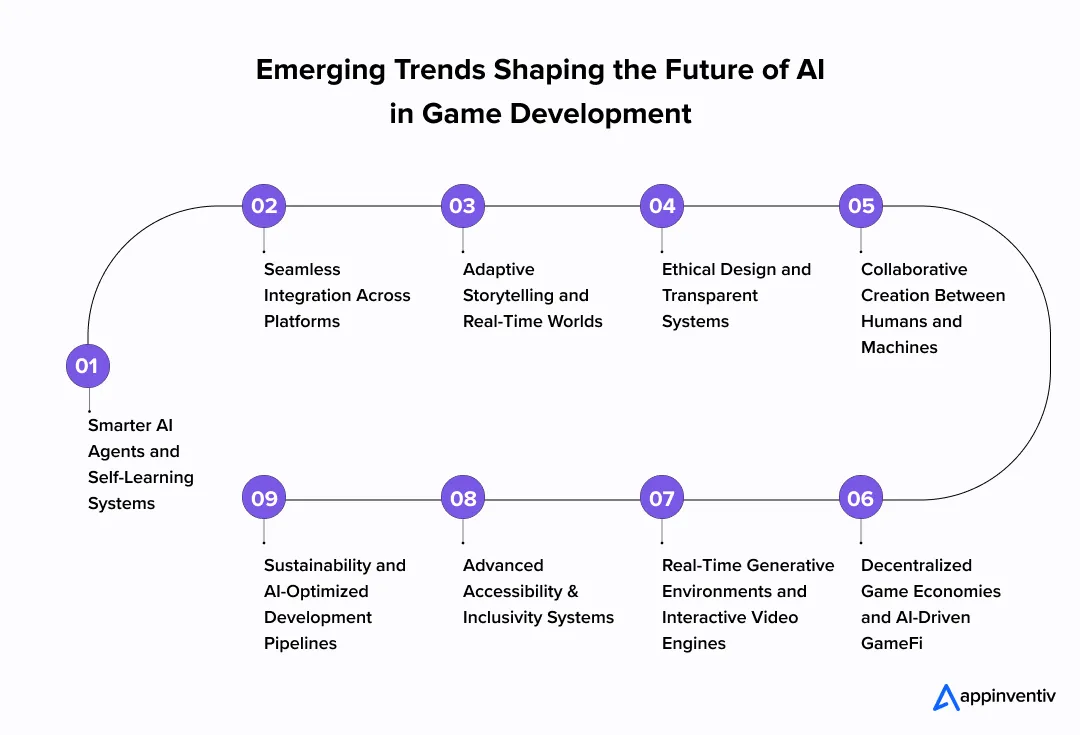
By 2026, Artificial Intelligence is no longer a nascent technology in game development; it's a pervasive force reshaping the entire creation pipeline. Developers are actively pushing past the limitations of static scripts and pre-written dialogues, striving for systems that can dynamically react, adapt, and even construct elements of the game world in real-time. This shift aims to deliver unique, ever-evolving experiences for players, though the integration is proving complex and met with considerable resistance.
From Checklists to Continuous Learning
Early game AI was characterized by simplicity: enemies followed basic patrol routes, non-player characters (NPCs) repeated canned dialogue, and pathfinding algorithms primarily served to prevent them from getting stuck. While behavior trees introduced more structured decision-making, the overall experience often felt predetermined. The advent of machine learning and large language models (LLMs) has fundamentally altered this landscape. AI can now analyze player actions instantaneously and adjust game elements accordingly, moving beyond simplistic enemy intelligence to create responsive interactions that acknowledge player choices, even if consistency remains a challenge in current releases.
Evolving NPCs: The Era of Conversational Depth
Traditionally, NPCs have been a point of immersion breakdown, often resorting to repetitive dialogue loops or exhibiting nonsensical behavior when players deviated from expected paths. Emerging prototypes are leveraging LLMs to facilitate genuine conversational exchanges. These advanced NPCs can recall past interactions, react with annoyance to repeated deception, or even decline quests based on their programmed personalities and evolving relationships with the player. Demonstrations at recent industry events have showcased towns where NPCs engage in negotiations or refuse requests based on prior player conduct, opening avenues for less linear narratives, though maintaining character consistency presents an ongoing hurdle.
AI-Generated Content vs. Procedural Generation
Procedural generation, a long-standing technique, has been instrumental in creating varied game worlds and unique levels, particularly in roguelikes and expansive open-world titles. However, this method can sometimes result in environments that feel repetitive or hollow. AI generation aims to transcend this by understanding context. Tools are emerging that can generate quests, maps, and side missions designed to align with the game's tone and the player's established playstyle, moving beyond mere random generation. The aspiration is for enhanced replayability, where the generated content feels cohesive and logically integrated rather than purely chaotic.
Tailored Player Journeys
Modern games are increasingly attuned to individual player habits. If a player consistently adopts an aggressive combat approach, the AI might dynamically increase the frequency or intensity of encounters. Conversely, a preference for stealth and dialogue could lead the system to prioritize branching conversations and less confrontational paths. Over extended play sessions, the AI subtly constructs a profile of the player's tendencies. This allows two individuals playing the same title to experience significantly different journeys, marked by unique boss encounters or distinct narrative arcs and character relationships, creating a sense of personalized gameplay even with nascent technology.
Streamlining the Development Workflow
Within development studios, AI is proving invaluable in automating laborious tasks that historically consumed considerable time and resources. Generating placeholder assets, creating dialogue variations, conducting rapid testing, and assisting in early prototyping are now faster processes. This frees up human developers to concentrate on more complex and creative aspects requiring nuanced judgment. Smaller development teams, in particular, benefit from these tools, enabling them to explore ambitious ideas without requiring massive teams or extended periods of crunch. Quicker updates and more frequent experimentation become feasible, leading to a more dynamic live-service ecosystem.
Developer Apprehension and Industry Concerns
Despite the technological advancements, a significant wave of developer backlash is evident. Recent industry surveys indicate a growing sentiment that generative AI is negatively impacting the industry, with a substantial majority of developers expressing concerns, particularly within artistic and writing disciplines. Fears are mounting regarding the potential displacement of junior roles and the proliferation of low-quality, derivative content. Issues surrounding the ethical sourcing of training data, the substantial energy demands of AI models, and accountability for problematic AI-generated output further erode trust.
Divergent Impacts: AAA vs. Indie Ecosystems
Major AAA studios are primarily adopting AI to mitigate the risks associated with large-scale, time-intensive projects. Applications include optimizing environment scaling, comprehensive game balance testing across myriad scenarios, and accelerating asset production to maintain stringent schedules. Independent developers, however, find AI empowering in a different capacity. Previously budget-prohibitive or specialist-requiring tools are now accessible, enabling solo creators and small teams to prototype and release concepts that would have been otherwise unachievable. This democratizes game creation, potentially fostering a greater diversity of unique and personal game experiences, though it also highlights a growing divergence in development realities.
The Horizon: Fully AI-Conceived Worlds?
Early demonstrations hint at the future possibility of entire game worlds being generated from simple text prompts or evolving dynamically based on community actions. The concept of persistent simulations that continue to develop even when players are offline presents an intriguing prospect. While fully AI-created games are moving from fantasy to potential reality, many industry professionals remain skeptical about their capacity to deliver genuinely satisfying experiences without significant human creative direction. AI excels at scale and variation, but the crucial elements of pacing, emotional resonance, and inherent fun still appear to necessitate human oversight, leaving the long-term impact and practical limitations of AI in game design to be determined in the coming years.
Source Insight: This report was curated based on original coverage from thegww.com.
Explore Kri-Zek
📱 Altered Brilliance App
Download on Google Play · Watch the Trailer
📖 The Power of Gaming
Watch the Video
🤝 Connect With Us
Kri-Zek on LinkedIn · Founder on LinkedIn · Happenstance
📸 Follow Us on Instagram
@krizekster · @krizek.tech · @krizekindia