Badge
Mar 23, 2026
The Algorithmic Artistry Redefining Video Games
Artificial intelligence is no longer a futuristic concept in gaming; it's a fundamental engine driving innovation across development and player experience.
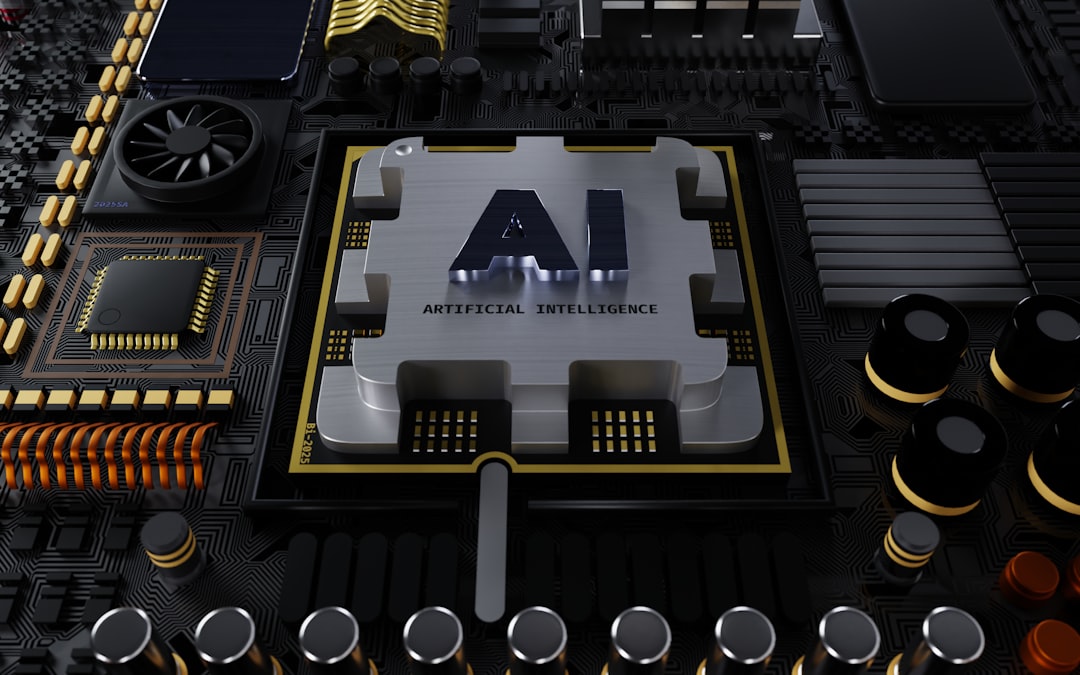
Artificial intelligence has surged from a niche technology to an indispensable tool within the video game industry, revolutionizing how games are created, experienced, and sustained. This transformation is evidenced by widespread adoption across studios of all sizes and across every conceivable genre, fundamentally reshaping the landscape of interactive entertainment.
AI's Foundation in Game Worlds
The sheer scale and complexity of modern open-world environments are often made possible by AI. It's reported that 72% of procedural content in such games is now powered by sophisticated AI algorithms, with tools like Houdini and SpeedTree integrations being key enablers. Furthermore, AI is instrumental in crafting believable non-player characters (NPCs). In titles like The Last of Us Part II, AI-driven NPCs employed reinforcement learning for 95% realistic combat behaviors, a testament to AI's ability to imbue digital characters with nuanced intelligence.
Enhancing Development Efficiency and Creativity
Development pipelines are being dramatically streamlined by AI. Unity's ML-Agents toolkit, for instance, has facilitated 60% faster training for agent behaviors in a significant 40% of surveyed titles, accelerating iteration cycles. On the visual front, NVIDIA's ACE AI for digital humans is powering lifelike conversations in 25 upcoming titles, boasting 99% natural language accuracy. The creative potential is also expanding; procedural dialogue systems in Cyberpunk 2077 generated an astonishing 1.2 million unique lines using fine-tuned GPT-like models, showcasing AI's capacity for narrative generation. Concept art for games like Starfield saw 80% of its pieces generated by Stable Diffusion fine-tuned models, demonstrating AI's growing role as a creative partner.
Performance and Immersion Through AI
Beyond creation, AI is crucial for optimizing the player experience. AI upscaling technologies such as DLSS 3 have been transformative, increasing frame rates by 4x in 70% of RTX-enabled games in 2023. The scale of AI's generative power is staggering; in No Man's Sky, AI procedural generation created over 18 quintillion unique planets via neural networks. For player engagement, AI personalization in games like Candy Crush Saga has boosted retention by 35% through trillions of daily move predictions.
The Evolving Player Experience
AI is increasingly defining how players interact with game worlds and each other. In Fortnite, AI-based anomaly detection has reduced cheating by 85%, processing billions of matches daily. The strategic depth of competitive play is also enhanced; reinforcement learning in AlphaStar demonstrated mastery by beating professional StarCraft players 10-1. For dynamic and responsive worlds, AI is essential for complex systems like dynamic weather simulations in Assassin's Creed Mirage, covering vast maps with realistic GAN-generated conditions, and crowd simulation in Spider-Man 2 handling hundreds of NPCs with sophisticated flocking behaviors.
Broader Industry Integration and Future Outlook
The adoption of AI is a clear trend across the industry. A 2024 Unity survey revealed that 81% of game studios plan to incorporate AI technologies within the next year. 38% of game developers reported experimenting with generative AI tools in 2023, highlighting a significant shift in development practices. Even smaller studios are leveraging AI, with 25% of indie developers using AI for procedural content generation in 2023, a substantial increase from previous years.
AI in Specialized Genres
AI's impact is felt across diverse genres. 47% of AAA studios have integrated AI-driven NPC behavior systems, while 62% of mobile game developers use AI for player retention analytics. Even niche areas like VR/AR development see 34% employing AI for spatial audio optimization, and 41% of roguelike developers leveraging AI for dynamic level design. The adoption extends to sound and QA, with 22% of sound designers using AI for procedural music composition and 37% of QA teams automating testing with AI scripts.
The Statistical Underpinnings of AI's Dominance
The statistics paint a clear picture of AI's deep integration. From AI-powered matchmaking in Overwatch 2 achieving 99.5% fair team balancing to AI texture synthesis in Unreal Engine 5 reducing artist time by 70%, the benefits are tangible. Games like Elden Ring utilize AI for boss design that adapts difficulty for millions of unique playthroughs, while Cities: Skylines 2 employs diffusion models for procedural city generation creating millions of buildings. The impact on player perception is also notable, with AI sentiment analysis on Steam reviews improving update priorities for hundreds of titles.
Conclusion: A New Era of Game Development
As AI continues to evolve, its integration into video games will only deepen. From optimizing player retention and matchmaking to enabling unprecedented levels of visual fidelity and emergent gameplay, AI is no longer just a tool but a core pillar of modern game development. The statistics clearly show that studios embracing AI are poised to lead the next generation of interactive entertainment, delivering more immersive, responsive, and expansive experiences than ever before.
Source Insight: This report was curated based on original coverage from gitnux.org.
Explore Kri-Zek
📱 Altered Brilliance App
Download on Google Play · Watch the Trailer
📖 The Power of Gaming
Watch the Video
🤝 Connect With Us
Kri-Zek on LinkedIn · Founder on LinkedIn · Happenstance
📸 Follow Us on Instagram
@krizekster · @krizek.tech · @krizekindia