Badge
May 11, 2026
The Dawn of Generative AI: Redefining Creativity and Industry in 2026
Generative AI has evolved from a concept to a dominant force across industries by 2026.
The Ascent of Generative AI
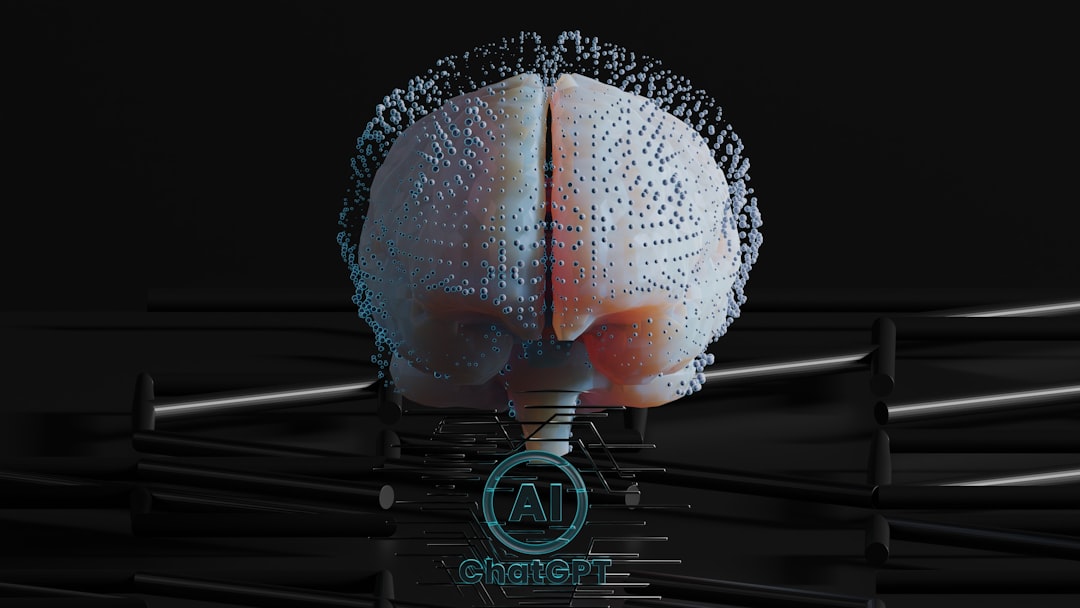
By 2026, Generative AI has transitioned from a niche research area into a pervasive technology, fundamentally altering how we create and interact with digital content. Its influence spans from sophisticated AI assistants crafting nuanced email responses to powerful tools designing fashion, composing music, and accelerating medical breakthroughs. This evolution marks a significant leap, demonstrating AI's capacity not merely for analysis but for genuine creation.
Understanding the Creative Engine
At its core, Generative AI is about creation, not just automation. It refers to artificial intelligence systems capable of producing entirely new data, ideas, or content that mimics human creativity. Unlike traditional AI, which focuses on analyzing existing data to make predictions or classifications, Generative AI learns patterns from vast datasets to synthesize novel outputs. This capability is largely powered by advancements in large language models (LLMs), sophisticated image generation tools, and emerging video and music generators.
Market Impact and Agentic AI
The economic footprint of Generative AI is undeniable, with the global market valued at over $120 billion in 2026 and projected for exponential growth. This surge is propelled by widespread adoption across businesses of all sizes and the development of accessible AI frameworks. A significant trend in 2026 is the rise of Agentic AI—intelligent systems designed to act independently, learn from their actions, and collaborate dynamically with human users, essentially functioning as proactive AI partners.
Real-World Transformations
Examples of Generative AI's impact are abundant. Coca-Cola's "Create Real Magic" campaign leveraged AI to foster millions of user-generated branded designs. In pharmaceuticals, Pfizer has achieved a remarkable 60% reduction in drug discovery timelines through AI-driven molecular generation. Meanwhile, Adobe Firefly empowers designers by enabling the instant creation of assets while ensuring copyright compliance and maintaining creative control.
The Foundational Technologies
Several key technologies underpin the capabilities of Generative AI. Neural Networks, inspired by the human brain, excel at pattern recognition. Deep Learning enables these models to discern complex patterns within massive datasets, leading to sophisticated comprehension of text, sound, and visuals. The Transformer architecture, a breakthrough introduced in 2017, revolutionized natural language processing by enabling AI to effectively understand context across extended passages. Generative Adversarial Networks (GANs), comprising a generator and a discriminator AI, have been crucial for producing highly realistic synthetic outputs, particularly in image generation. More recently, Diffusion Models, driving tools like DALL·E 3 and Midjourney, offer state-of-the-art image generation by progressively refining noise into coherent visuals. The 2026 landscape also highlights Retrieval-Augmented Generation (RAG), which enhances AI accuracy and currency by integrating real-time external knowledge.
Generative AI vs. Traditional AI
The distinction between traditional and generative AI is critical. Traditional AI excels at analysis, prediction, and classification tasks like spam detection or movie recommendations, producing outputs such as "spam" or "not spam." Generative AI, conversely, focuses on creation, producing novel content like blog posts, images, or music. While traditional AI helps us understand the world, generative AI empowers us to actively create within it, representing a paradigm shift towards proactive innovation.
The Process: Learning, Modeling, and Creation
Generative AI operates through a fascinating, albeit logical, process. It begins with a training stage, where AI models analyze enormous datasets—millions of images for visual models, or vast troves of text for language models—to learn underlying patterns and relationships. This is followed by a modeling stage, where the AI constructs an internal, mathematical representation of this learned knowledge, enabling it to predict subsequent elements in a sequence or structure. Finally, the creation stage is triggered by user prompts. The AI draws upon its learned patterns and internal model to generate entirely new content, whether it's text, an image, or code, fulfilling the specific request.
Redefining Collaboration
Ultimately, Generative AI is not poised to replace human creativity but to augment it. It provides powerful new tools that can accelerate workflows, overcome creative blocks, and unlock novel forms of expression. The technology is becoming a foundational layer of digital transformation, promising to redefine the collaborative landscape between humans and machines across virtually every industry.
Quick Takeaway
Generative AI is not a singular tool but an expansive ecosystem of technologies fostering creativity, efficiency, and automation, poised to revolutionize industries and expand the possibilities of human-machine collaboration.
Source Insight: This report was curated based on original coverage from brollyai.com.
Explore Kri-Zek
📱 Altered Brilliance App
Download on Google Play · Watch the Trailer
📖 The Power of Gaming
Watch the Video
🤝 Connect With Us
Kri-Zek on LinkedIn · Founder on LinkedIn · Happenstance
📸 Follow Us on Instagram
@krizekster · @krizek.tech · @krizekindia