Badge
May 25, 2026
The Dawn of Intelligent Development Environments: Understanding AI IDEs
AI IDEs are revolutionizing software development by embedding intelligent agents directly into code editors.
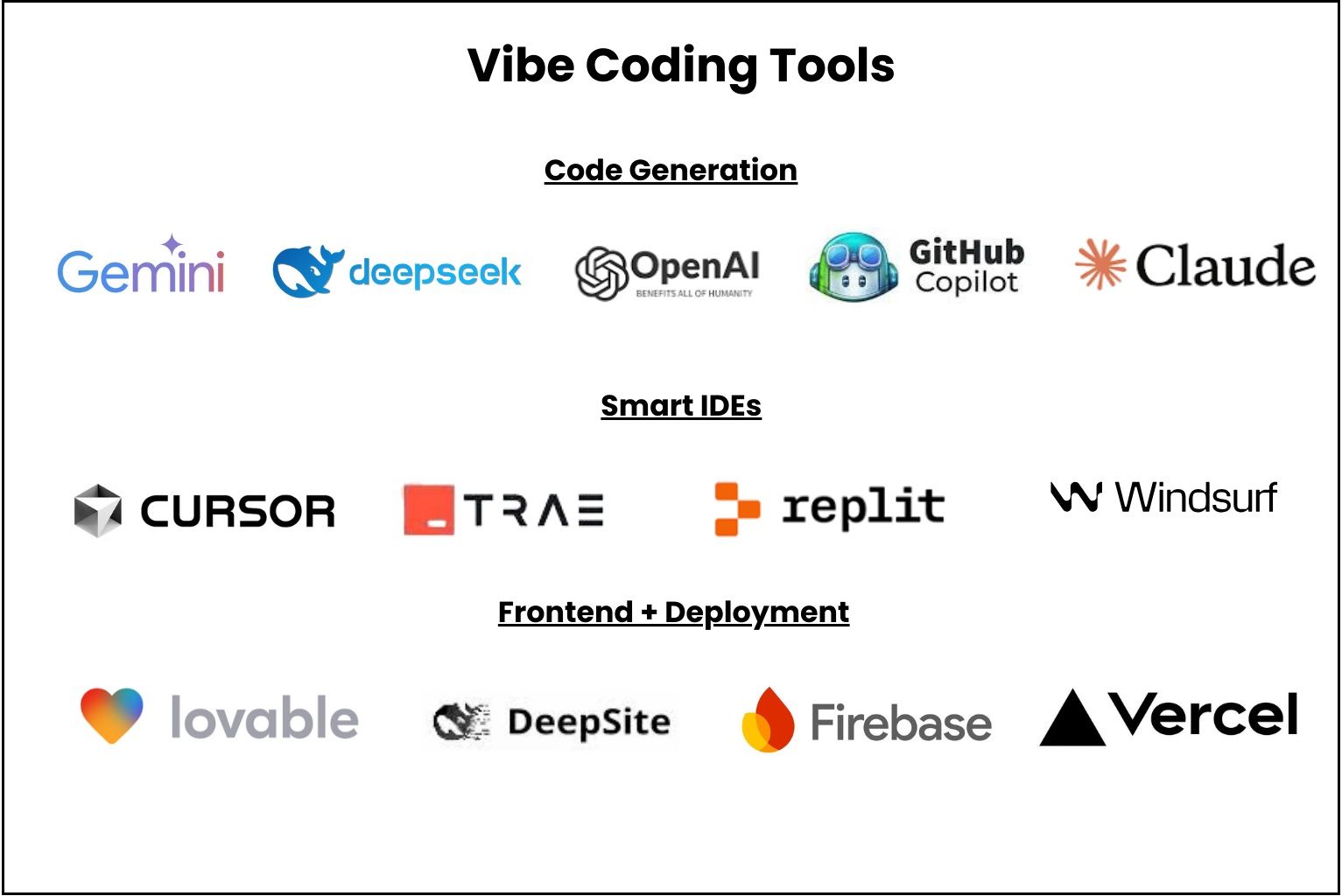
The landscape of software development is undergoing a profound transformation with the emergence of AI Integrated Development Environments (IDEs). These are not merely text editors; they are sophisticated platforms that embed AI agents and Large Language Models (LLMs) directly into the core coding experience. This integration automates tasks such as code generation, debugging, and refactoring, while also enabling natural language interactions with the codebase. The result is a development environment that moves beyond a passive tool to become an active collaborator, dramatically accelerating the journey from an idea to a committed code change.
Redefining the Developer's Workspace
Traditionally, IDEs have served as a bundled suite of essential tools for developers, encompassing text editors, compilers, debuggers, and project management utilities. They provide a unified space for writing, testing, and running code. AI IDEs build upon this foundation by layering LLM-powered capabilities, fundamentally altering the dynamic of the developer's workspace. Instead of manually crafting every line of code and constantly referencing documentation for syntax or API details, developers can now receive real-time suggestions, generated code blocks, and instant explanations. This shifts the paradigm towards a more conversational and collaborative coding process, akin to having a dedicated pair-programming partner.
Navigating the AI Tool Spectrum
The term "AI IDE" is often used broadly, leading to confusion when evaluating tools for security, procurement, and compliance. It's crucial to distinguish between three distinct categories: standalone AI IDEs, traditional IDEs augmented with AI plugins, and standalone AI coding assistants. Standalone AI IDEs, like Cursor, have AI as a core architectural component. Traditional IDEs, such as VS Code or JetBrains, can integrate AI capabilities through extensions like GitHub Copilot. Finally, standalone AI coding assistants, exemplified by ChatGPT or Claude, are separate applications that require manual input and do not inherently possess deep codebase context.
The Security Implications of Embedded AI
This categorization is particularly vital for security teams. Standalone AI IDEs and AI plugins may transmit code context, including entire files or repository indexes, to third-party LLM providers. This introduces significant data handling and leakage risks that must be meticulously evaluated before enterprise-wide adoption. The ability of these AI agents to autonomously execute commands and modify local files, a feature often found in standalone AI IDEs, further expands the security surface, requiring robust monitoring and control mechanisms.
The Mechanics of AI-Powered Coding
Under the hood, AI IDEs typically route developer prompts to one or more LLMs, which can be cloud-hosted or run locally. To ensure project relevance, they employ context-retrieval techniques, often referred to as Retrieval-Augmented Generation (RAG). This process attaches relevant code snippets, documentation, and currently open file contents to each prompt. Some AI IDEs achieve this by indexing the entire repository in a vector store for semantic search, while others utilize simpler signals like recently accessed files or surrounding code context. This sophisticated mechanism allows the AI to generate more accurate and contextually aware code suggestions.
Enhancing AI Context with Model Context Protocol
Modern AI tools are increasingly adopting the Model Context Protocol (MCP). MCP serves as a standardized, secure bridge enabling AI IDEs to connect directly with external tools and enterprise systems. This goes beyond simply reading local files; MCP-enabled IDEs can query live database schemas, retrieve requirements from project management tools like Jira, or analyze error logs from monitoring systems like Datadog. By grounding AI models in the broader engineering ecosystem's reality, MCP significantly reduces the likelihood of AI-generated errors or irrelevant code.
Security Guardrails for the AI-Driven Workflow
The acceleration of code generation and deployment enabled by AI IDEs introduces substantial security risks. The speed at which unreviewed code, misconfigured infrastructure templates, and hardcoded secrets can reach production environments is unprecedented. Consequently, AI-generated infrastructure-as-code and application code demand comprehensive security guardrails that extend from the IDE through the Continuous Integration and Continuous Deployment (CI/CD) pipeline, all the way to the cloud runtime. Relying solely on pre-commit scans is insufficient, as it fails to capture the actual behavior of code once deployed in a dynamic environment.
Wiz Code: Bridging Development and Cloud Security
Addressing these challenges requires a solution that connects code-level findings with cloud runtime context. Tools like Wiz Code operate as IDE extensions within AI-powered development environments. By linking vulnerabilities, secrets, and misconfigurations identified in the code directly to their implications within the cloud infrastructure, teams can proactively catch and remediate issues before they are shipped. This integrated approach ensures that security is not an afterthought but an inherent part of the AI-accelerated development lifecycle, providing visibility both before deployment and throughout runtime.
Source Insight: This report was curated based on original coverage from wiz.io.
Explore Kri-Zek
📱 Altered Brilliance App
Download on Google Play · Watch the Trailer
📖 The Power of Gaming
Watch the Video
🤝 Connect With Us
Kri-Zek on LinkedIn · Founder on LinkedIn · Happenstance
📸 Follow Us on Instagram
@krizekster · @krizek.tech · @krizekindia