Badge
Apr 11, 2026
The Unseen Advantages of Digital Play
Beyond mere entertainment, video games are increasingly recognized as powerful tools for personal growth.
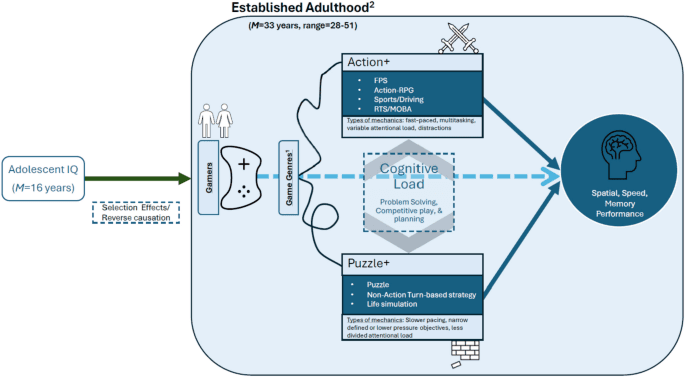
In contemporary society, video games have transcended their initial perception as simple pastimes to become a significant cultural force. While not everyone identifies as a gamer, the pervasive influence of interactive digital media is undeniable. Emerging research is illuminating a more profound impact than mere escapism, particularly concerning personal development. Studies now indicate that engaging with video games can actively enhance a range of cognitive and social skills, offering a rich avenue for growth, learning, and skill cultivation, especially among young adults.
Cultivating Cognitive Agility Through Gameplay
One of the most celebrated benefits of video games lies in their capacity to sharpen problem-solving skills. Many contemporary games are architected with intricate challenges that necessitate players engaging in critical thinking, situational analysis, and strategic formulation. Whether navigating complex mazes, deciphering elaborate puzzles, or strategizing for virtual combat, games demand a mental agility that readily translates to real-world scenarios. Research substantiates that playing these titles significantly improves cognitive flexibility, a cornerstone of effective problem-solving. This ability to rapidly assess situations, dissect variables, and formulate viable solutions is crucial not only within the gaming sphere but also in academic and professional contexts.
Classic examples like The Legend of Zelda and Portal exemplify this by presenting players with logical and spatial puzzles. The former often involves navigating dungeons by solving multi-step riddles, requiring sequential logic, spatial awareness, and judicious use of acquired items. Portal, on the other hand, immerses players in physics-based predicaments where reasoning is paramount to manipulating portals and overcoming obstacles. Both games inherently foster a cycle of trial-and-error, deductive reasoning, and adaptive learning – skills directly applicable to overcoming real-world challenges.
Fueling Imagination and Creative Expression
Video games are far more than just arenas for action; they are often expansive worlds rich with narratives, characters, and visual landscapes that ignite the imagination. Titles such as Minecraft and The Sims offer players unparalleled freedom to construct virtual environments, develop unique characters, and weave intricate narratives. This level of creative agency serves as a powerful catalyst for imagination and can cultivate skills vital for disciplines like design, storytelling, and architecture.
The nexus between creativity and gaming is further supported by self-determination theory (SDT), which posits that video games can fulfill fundamental psychological needs, including autonomy and competence. By granting players the agency to make creative choices and devise distinctive strategies, games cultivate an environment where creativity can flourish.
Enhancing Strategic Decision-Making
Beyond problem-solving, video games actively contribute to the development of critical thinking. Many games present players with consequential choices, demanding careful deliberation and an understanding of potential outcomes. Titles like Mass Effect and The Witcher frequently place players in complex moral quandaries, compelling them to meticulously weigh their options. A significant body of research, such as studies on video games and critical thinking (Adachi, 2017), indicates that engaging with strategy-based games correlates with enhanced decision-making abilities. These genres require players to think spontaneously, evaluate available resources, and formulate long-term plans, mirroring the demands of professional and academic environments.
Fostering Social Bonds and Collaboration
It is a misconception that all video games are solitary pursuits. Multiplayer and cooperative games are fundamentally social experiences, necessitating teamwork towards a shared objective. In games like Overwatch or Fortnite, success is often contingent not solely on individual prowess but crucially on effective collaboration. These interactions foster vital skills for group projects, workplace dynamics, and everyday social engagements.
Furthermore, research, including work by Halbrook (2019), highlights that educational video games can significantly improve social skills, particularly among younger demographics. Cooperative gaming experiences can cultivate empathy, refine communication, and strengthen collaborative capacities – abilities that extend far beyond the digital realm.
The Importance of Balanced Engagement
While the developmental advantages of video games are substantial, it is imperative to acknowledge the importance of moderation. Excessive engagement can lead to adverse outcomes, underscoring the need for a balanced approach to digital play.
Source Insight: This report was curated based on original coverage from vgleaks.com.
Explore Kri-Zek
📱 Altered Brilliance App
Download on Google Play · Watch the Trailer
📖 The Power of Gaming
Watch the Video
🤝 Connect With Us
Kri-Zek on LinkedIn · Founder on LinkedIn · Happenstance
📸 Follow Us on Instagram
@krizekster · @krizek.tech · @krizekindia